Blog & Updates From Texturly

Texturly blog for the latest news, tips, tricks, and how-to articles on advanced AI texture generation platform.

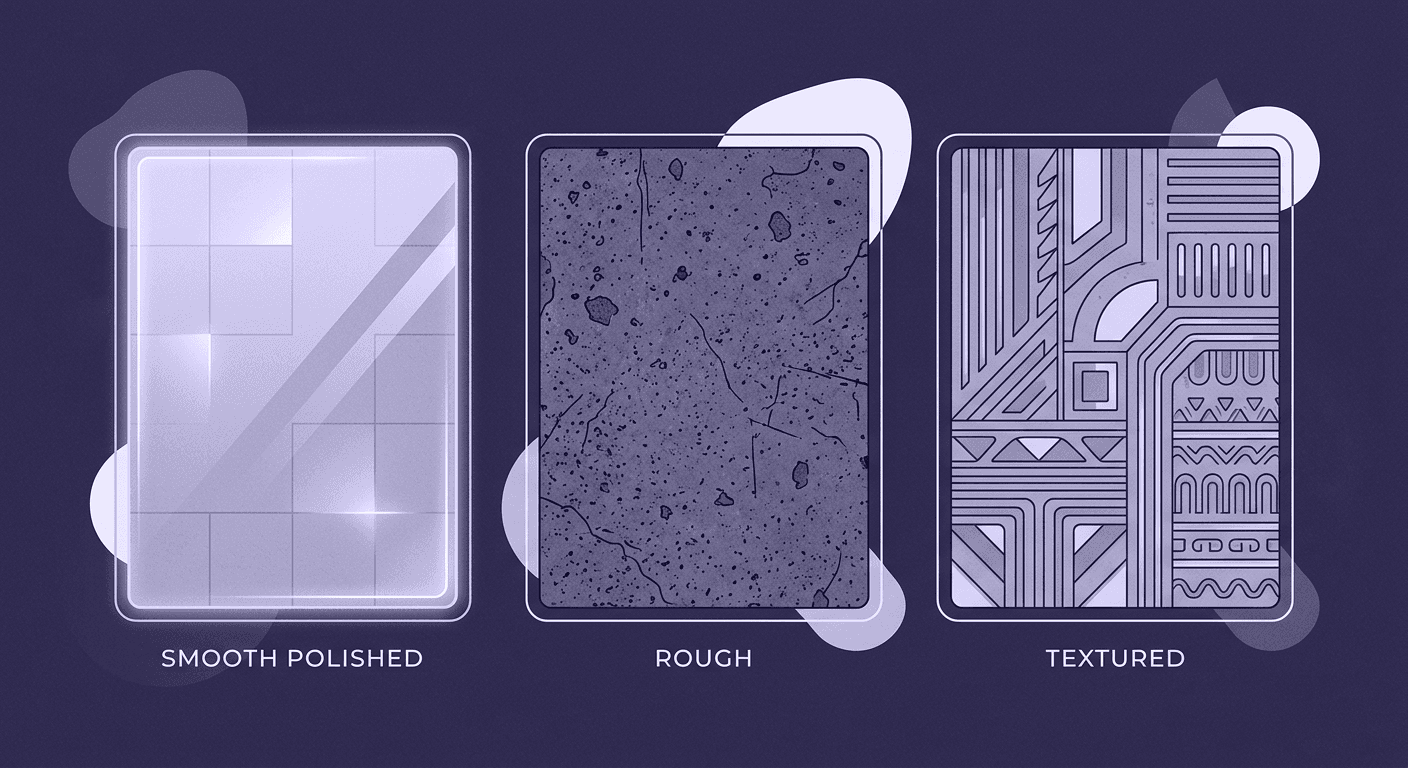
A side-by-side comparison of three concrete finishes: smooth polished, rough natural, and patterned textured surfaces.
This comparison illustrates the functional range of concrete finishes; choosing between high-gloss polished surfaces for light reflection and rough, high-friction textures is essential for balancing project aesthetics with safety requirements.

A Practical Guide for How to Choose The Right Concrete Texture for Your Project

3D texturesPBR textures

Struggling to pick the right concrete texture for your project? Discover how finishes, lighting, and design style impact realism, and learn a smarter way to choose textures that elevate your architectural and archviz work.

Mira Kapoor

Mira Kapoor

Apr 29, 2026 · 10 mins read
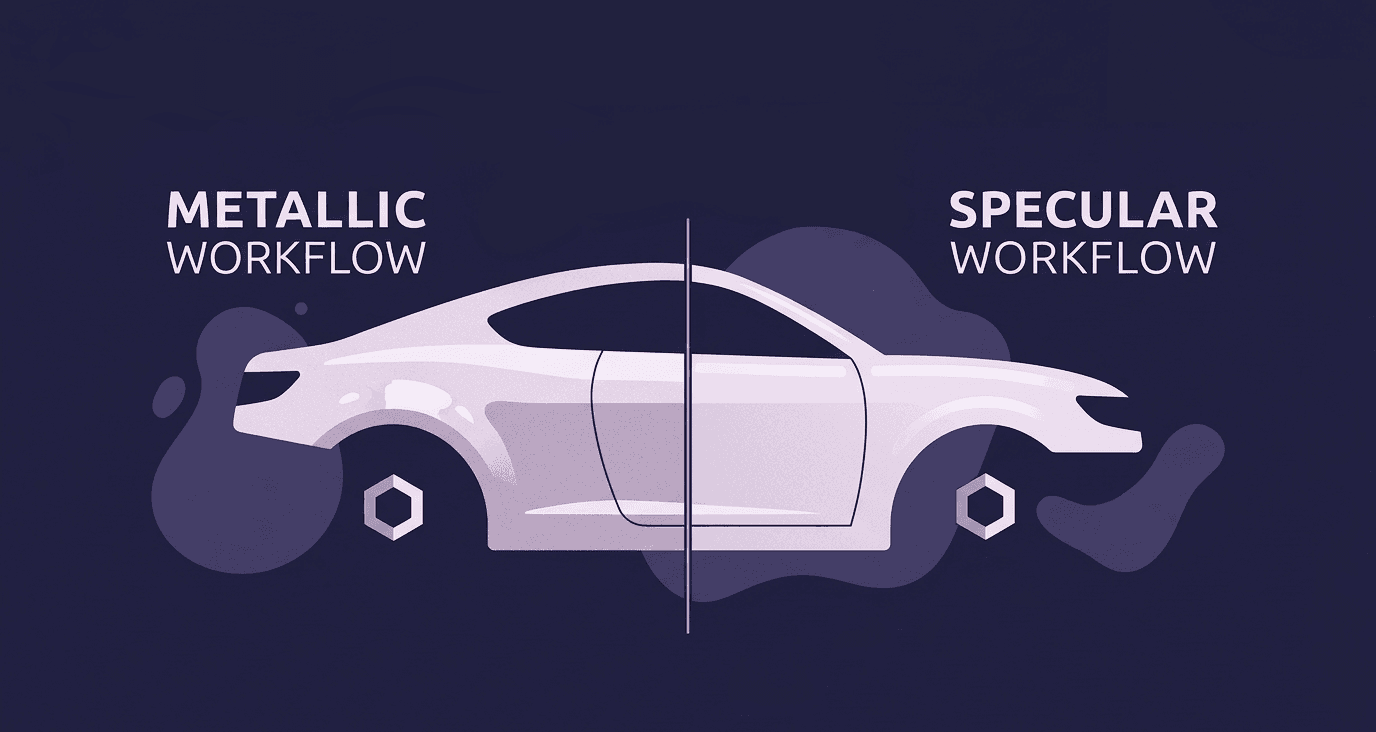
A side-by-side comparison diagram of a 3D car model illustrating the differences between Metallic and Specular PBR rendering workflows.
Choosing your path: While the Metallic workflow is often more memory-efficient, the Specular workflow offers more granular control over over-reflections and F0 values.

Metallic vs Specular Workflow: Choosing the Right PBR Textures for Realistic Renders

Product renderingPBR textures

This guide explores how to find high-quality free metal PBR textures and explains the key differences between metallic and specular workflows. It helps designers choose the right approach for realistic and efficient rendering.

Max Calder

Max Calder

Apr 17, 2026 · 14 mins read

A technical comparison diagram showing a Free/Basic untextured gray box environment transitioning into a Professional Quality dungeon through the application of Albedo, Normal, and Roughness maps.
The secret of successful indie games is the Professional Quality bridge: by layering Albedo, Normal, and Roughness maps onto free base assets, developers can achieve cinematic environmental storytelling without high overhead.

How Successful Games Use Free Textures: Case Studies & Pro Techniques

Game texturesPBR textures

explores how successful games use free textures to create high-quality visuals without large budgets. It highlights key techniques like layering, reuse, and lighting. The main takeaway: smart implementation matters more than expensive assets.

Mira Kapoor

Mira Kapoor

Apr 3, 2026 · 14 mins read

An abstract representation of a technical 4-step workflow diagram: Base 3D Model, UV Mapping Grid,  Applying Albedo, Roughness, Normal, and Metallic PBR maps, and the Final Realistic Material sphere.
Closing the deal requires more than just color; a professional pipeline must synchronize UV mapping precision with a complete PBR stack, including Albedo, Roughness, and Normal maps, to create a final, realistic material that stands up to scrutiny.

Build 3D Textures That Actually Close Deals

PBR textures3D textures

Turning your designs from lifeless to vivid requires more than just skillful modeling. This guide dives into the workflow of building and applying realistic 3D textures that not only enhance visual appeal but also expedite client approvals. Let's transform your texture game.

Max Calder

Max Calder

Mar 30, 2026 · 14 mins read

A split-screen comparison of a sci-fi interior; the left side shows a clean, untextured wireframe model, while the right side displays the same model with weathered metallic PBR textures and neon emissive lighting.
The difference between a model and a world: By enabling PBR shaders, 3D artists transform static geometry into reactive environments where metallic wear and realistic light bounces define the user experience.

How 3D Artists Create Realistic Textures for Metaverse Worlds

PBR textures3D textures

Ever wondered how top-tier artists create unbelievably real textures in the metaverse? This guide delves into the practical techniques that transform basic shapes into immersive experiences. Explore masterful texture creation and elevate your design narrative to captivate every user.

Max Calder

Max Calder

Mar 23, 2026 · 14 mins read

Conceptual illustration in an article about building photorealistic ceramic, plastic, and nylon, showing geometric forms transformed by PBR texture mapping for gloss, subsurface scattering, and anisotropic sheen.
This illustration showcases how PBR texturing can simulate realistic material properties like gloss and subsurface scattering for ceramics and plastics.

Build Photorealistic Ceramic, Plastic, and Nylon That Sells Your Vision

PBR textures3D textures

Explore the nuances of creating photorealistic textures for ceramics, plastics, and nylon. Dive into practical PBR techniques to make your designs tangible, bridging the gap between digital prototypes and the real-world feel they need to convey.

Max Calder

Max Calder

Mar 20, 2026 · 15 mins read

An abstract representation of a three-panel comparison of car renders: Good shows Generic Metallic, Great shows Multi-layered Flake, and Exceptional displays Anisotropic Brushed Metal with realistic light streaks.
This artistic visualization emphasizes that a great render is material honesty; while generic metallic surfaces suffice for drafts, exceptional automotive visualization requires anisotropic brushed metal to capture complex light interactions.

Three Metal Textures That Separate Good Car Renders From Great Ones

PBR textures3D textures

Struggling to elevate your car renders to photorealistic heights? Uncover the subtle power of metal PBR textures. Explore a game-changing guide on cladding, expanded, and perforated textures that infuse realism and adaptability into your automotive designs.

Max Calder

Max Calder

Mar 18, 2026 · 12 mins read

A conceptual illustration showing the intersection of Albedo, Roughness, Normal, and Metalness maps, with a side-by-side comparison of Legacy textures versus PBR Metallic with low and high roughness.
This illustration captures the Intersection of PBR maps, which defines a material's identity, highlighting the essence of metalness in digital textures.

The One PBR Property That Transforms Digital Materials

PBR textures3D textures

Struggling to create truly metallic finishes for your 3D models? This guide demystifies the PBR metalness property, offering practical techniques and shader examples to ensure photorealistic results. Dive into mastering metalness and revolutionize your design approach.

Max Calder

Max Calder

Mar 16, 2026 · 14 mins read

Texturly company logo - a stylized letter T

Accelerate you workflow

with automated PBR texture generation

Enjoy creative freedom with AI powered texture creation