Top 5 Benefits of Using PBR Textures in Digital Design
By Max Calder | 12 June 2026 | 10 mins read
Table of contents
Table of Contents
Whether you are exploring a massive open-world video game, interacting with a 3D product preview online, or viewing a photorealistic architectural walkthrough, digital assets surround us. However, creating a believable digital world requires more than just shaping a 3D model. The true magic lies on the surface. Even a perfectly sculpted object will look fake, plastic, or unconvincing if its surface fails to react realistically to light.
Historically, achieving realistic surfaces was a guessing game of manual painting and endless trial and error. That changed with the arrival of Physically Based Rendering (PBR) textures.
PBR textures have become the global industry standard for modern digital design. By utilizing real-world physics and mathematical data to simulate how light interacts with surfaces, PBR workflows remove the guesswork from 3D texturing. This comprehensive article explores the top five benefits of incorporating PBR textures into your digital design workflow and explains why they are an invaluable asset for modern 3D artists and modelers.
The paradigm shift: Moving beyond traditional shading
To understand the immense value of PBR, it is vital to look at how 3D artists used to create materials before this technology became standard practice.
The flaws of old-school texturing
In traditional rendering workflows, texturing was highly subjective. Artists created "diffuse" color maps and manually painted highlights, shadows, and reflections directly onto the image flat file. If an artist wanted an object to look shiny, they literally painted a white highlight onto the surface.
While this look worked well under a single, static lighting setup, it broke down instantly if the asset moved. If a character walked from a dark, moody cave out into bright midday sunlight, the painted-on reflections remained frozen in place. The object looked completely unnatural because its surface could not dynamically respond to the environmental changes.
Enter the physics-based standard
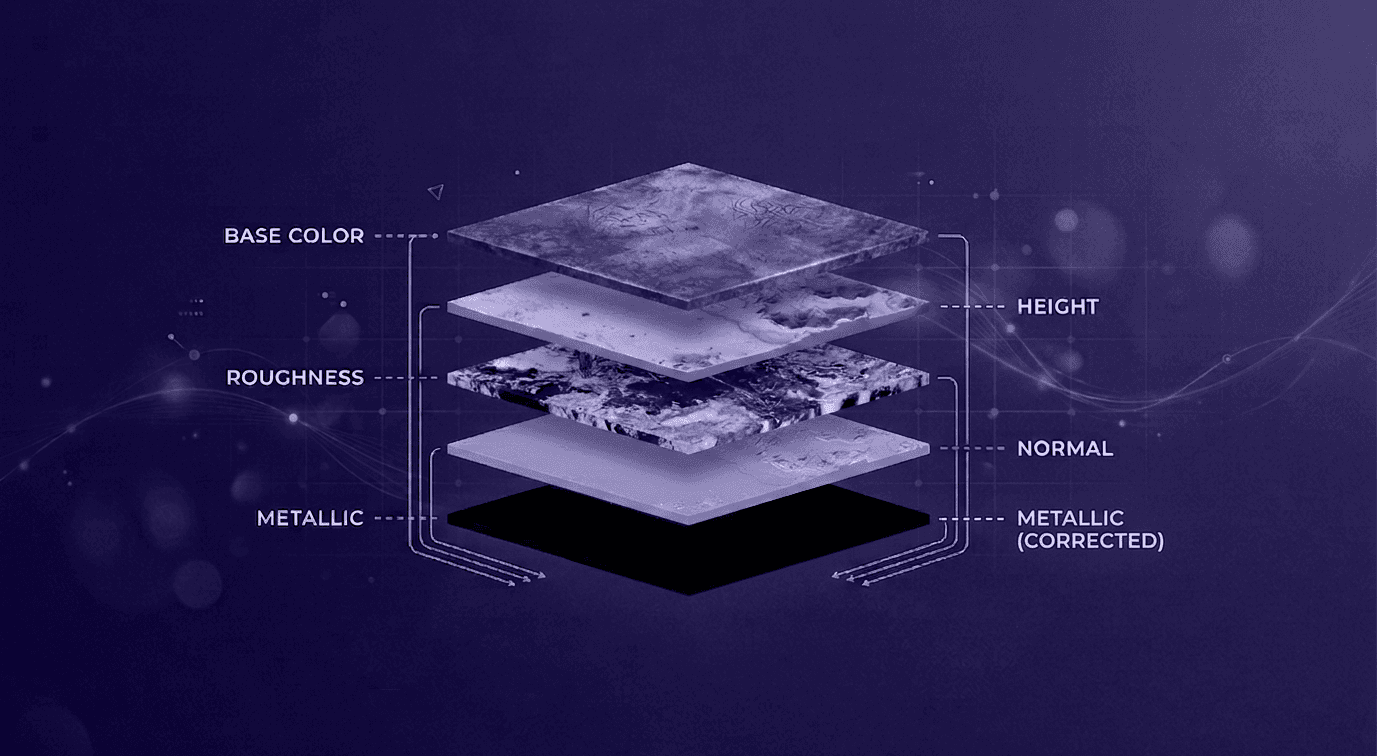
PBR changed everything by decoupling material data from lighting data. Instead of guessing how a block of metal or a piece of leather looks under a specific light bulb, PBR textures break down a material into its core physical properties using specialized data maps. These maps tell the rendering engine exactly how rough, reflective, or conductive a surface is based on real-world physics values.
The engine then calculates the lighting dynamically in real-time. This shifted texturing from an artistic approximation to a predictable, highly accurate science.
Benefit 1: Enhanced realism under any lighting condition
The absolute crowning achievement of a PBR workflow is its ability to maintain pristine visual realism regardless of the lighting environment. In digital design, an asset is rarely viewed in a vacuum; it must live, move, and adapt across vastly different scenes.
Simulating real-world surface behavior
Every physical object around you interacts with light according to the laws of physics. A piece of raw concrete absorbs and scatters light wildly in all directions, whereas a polished sheet of chrome catches light sharply and reflects its surrounding environment like a mirror.
PBR textures capture these micro-surface behaviors perfectly through two primary workflows:
- The metallic/roughness workflow: Uses a grayscale map to define which parts of an object are raw metal versus non-metal (dielectric), paired with a roughness map that dictates how tightly or widely light rays scatter upon impact.
- The specular/glossiness workflow: Uses color data to define the intensity of reflections alongside a glossiness map to control surface smoothness.
Because these parameters use real physical measurements, light rays bouncing off a PBR material behave exactly as they would in the physical world. Reflections soften naturally, highlights sharpen instantly under direct bulbs, and shadows fall into crevices realistically.
True environmental adaptability
With traditional materials, changing a scene's lighting meant rebuilding your texture libraries from scratch. PBR completely eliminates this bottleneck. Because a PBR texture dictates material behavior rather than a fixed visual appearance, the asset becomes universally adaptable.
An automobile asset textured via PBR can move from a warm, indoor showroom to a rainy, neon-lit city street at night, and finally to a blindingly bright desert highway without a single texture adjustment. The metal body stays metallic, the rubber tires remain matte, and the glass windows reflect the changing horizons perfectly. This adaptability saves thousands of production hours across multi-scene projects.
Benefit 2: Accurate material representation across textures
Realism isn't just about looking beautiful; it is about looking correct. The human brain is incredibly sensitive to visual discrepancies. Even if a viewer isn't a trained artist, they instantly sense when a texture fails to accurately communicate its true material identity. PBR textures excel at clearly establishing what an object is made of the second it appears on screen.
Material accuracy: Metal vs. Non-metal
One of the most profound concepts built into PBR physics is the strict separation between metals (conductors) and non-metals (dielectric materials). Real metals reflect up to 70% to 90% of incoming light, and their reflections are tinted by the color of the metal itself (e.g., gold yields yellow reflections). Non-metals reflect far less light (usually around 4%), and their reflections remain white or untinted.
PBR texturing enforces these exact rules mathematically. When creating a texture set, the AI or the texturing software ensures that your brass buttons look unmistakably metallic, while the heavy wool coat they sit on absorbs light exactly like organic fabric. This distinct separation brings an elite level of tactile believability to digital objects.
Better communication of visual narrative
Materials are storytelling devices. A rusty iron pipe tells a completely different story than a clean, brushed-steel medical tool. Because PBR maps separate color from surface texture, artists can layer realistic storytelling elements onto an asset with flawless accuracy.
Using a PBR roughness map, an artist can add grease smudges, dust build-ups, scratches, and sweat marks. A fingerprint on a glass screen won't just look like a gray smudge; it will physically alter the roughness map, causing light to scatter softly across the fingerprint while remaining perfectly sharp on the clean glass next to it. This level of detail builds intense trust and visual authenticity with the audience.
Benefit 3: Consistent results across different rendering engines
Modern digital production pipelines are incredibly complex. An asset rarely stays inside the software program where it was originally born. It is common for a 3D asset to be modeled in one application, textured in an automated painting tool, viewed by a client inside a web viewer, and finally loaded into a real-time game engine or a high-end cinematic renderer.
A universal material language
Before PBR became the industry standard, moving assets between different software applications was a technical nightmare. Every program utilized its own unique shading math. A texture that looked flawless in a standalone modeling app would often turn completely white, lose its gloss, or look impossibly dark when imported into a game engine. Technical artists spent massive blocks of time re-tweaking parameters to match the new software's quirks.
PBR unified the entire industry under a single, shared material language. Because PBR math relies on universal physical principles, almost every major modern rendering application, including Unreal Engine, Unity, Blender, Maya, 3ds Max, and modern web-based 3D viewers, handles PBR inputs the same way.
Streamlining team workflows and portability
This cross-platform consistency dramatically improves collaboration across design teams. Texture artists can hand off their PBR maps to lighting artists, layout designers, or developers with absolute confidence that the material integrity will remain intact throughout the entire pipeline.
Furthermore, this standardization makes asset portfolios and material libraries incredibly future-proof. A high-quality PBR wood texture created years ago remains entirely usable inside brand-new software releases today because the underlying physical math hasn't changed.
Benefit 4: Richer surface detail without increasing geometry
In the world of 3D design, polygon count (geometry complexity) is currency. The more polygons a model has, the heavier its file size becomes, the longer it takes to render, and the harder it hits system performance. For real-time applications like video games or virtual reality, keeping geometry optimized is a matter of survival.
The illusion of depth via normal and height maps
One of the most practical benefits of a PBR workflow is its ability to fake complex micro-geometry without adding a single polygon to the actual 3D model. This is achieved primarily through normal maps and height maps.
A normal map uses RGB color data to change how light bounces off the flat face of a model. Instead of light bouncing off a perfectly flat square, the normal map tricks the rendering engine into believing the surface has tiny tilts, bumps, cracks, or ridges.
Maximizing visual performance budgets
Using this texture-based strategy, a flat 3D cylinder can be instantly transformed into a beautifully detailed, rustic brick column. The deep grooves of the mortar, the rough crags of the brick faces, and the tiny chips along the edges are all handled entirely at the texture level by the normal and roughness maps.
The model remains incredibly lightweight and highly performant for real-time applications, yet it delivers a level of perceived visual depth that would traditionally require millions of modeled polygons. This allows creators to build vast, rich digital worlds that run smoothly on standard consumer hardware.
Benefit 5: Greater asset longevity and long-term reusability
Creating high-end 3D assets is an expensive investment of time, money, and creative labor. If a material can only be used once within a single scene before breaking down, its long-term financial value is incredibly low. PBR textures solve this limitation by offering unmatched durability and reusability.
Building reusable, scalable material libraries
Because PBR textures look correct in any lighting setup and function consistently across almost all major modern software tools, they serve as perfect building blocks for scalable studio libraries.
A studio can invest time into developing an incredibly polished set of base materials, such as brushed copper, treated leather, scratched plastic, or polished marble. Once these PBR assets are finalized, they become a permanent corporate resource. Designers can pull these materials from the cloud and apply them to completely different projects for years to come, instantly establishing a baseline of premium quality while dramatically slashing production costs on subsequent projects.
Adapting to emerging tech
The digital design industry is moving at a breakneck pace. We are seeing constant shifts toward augmented reality (AR), virtual showrooms, and real-time interactive product pipelines. Assets built using proprietary, non-standard traditional workflows quickly become obsolete when a company decides to upgrade its technology stack.
Because PBR is natively baked into the foundation of modern interactive technology, PBR textures are inherently future-proof. Investing in a PBR asset pipeline today ensures your 3D assets are instantly prepared to transition into the next generation of digital media platforms tomorrow.
Why PBR textures are essential for modern workflows
Physically Based Rendering has thoroughly earned its status as the definitive standard for digital design. By substituting artistic guesswork with data-driven physical logic, PBR textures bridge the gap between creative imagination and real-world believability. They empower creators to achieve breathtaking visual realism under dynamic lighting conditions, communicate authentic material stories clearly, and maintain absolute pipeline consistency across disparate software applications.
Simultaneously, PBR maximizes hardware performance by simulating intricate surface details at the texture level rather than choking systems with dense geometry. This technical efficiency ensures that your creative assets retain their immense production value and reusability long after a project wraps. For any modern digital artist, architectural modeler, or game developer aiming to produce professional-grade, future-proof 3D content, embracing a complete PBR texture workflow is no longer an optional upgrade; it is an absolute necessity.

Max Calder
Max Calder is a creative technologist at Texturly. He specializes in material workflows, lighting, and rendering, but what drives him is enhancing creative workflows using technology. Whether he's writing about shader logic or exploring the art behind great textures, Max brings a thoughtful, hands-on perspective shaped by years in the industry. His favorite kind of learning? Collaborative, curious, and always rooted in real-world projects.
Latest Blogs
The Indie Dev Guide to CC0 PBR Textures: Stop Searching, Start Cr...
PBR textures
AI in 3D design

Mira Kapoor
Jul 10, 2026
Sourcing Free Game Textures: Navigating PBR Pipelines and Stylize...
PBR textures
Game textures
Mira Kapoor
Jul 6, 2026
Sculpting with Sunlight: The Architectural Physics of Facade Text...
Texture creation
AI in 3D design

Max Calder
Jul 1, 2026

Accelerate you workflow
with automated PBR texture generation
Enjoy creative freedom with AI powered texture creation
 Texturly
Copyright © 2026 Texturly, Asha Technology Labs Pvt. Ltd. All rights reserved