DIY Textile Texture Techniques That Make Digital Designs Come Alive
By Max Calder | 8 December 2025 | 16 mins read
Table of contents
Table of Contents
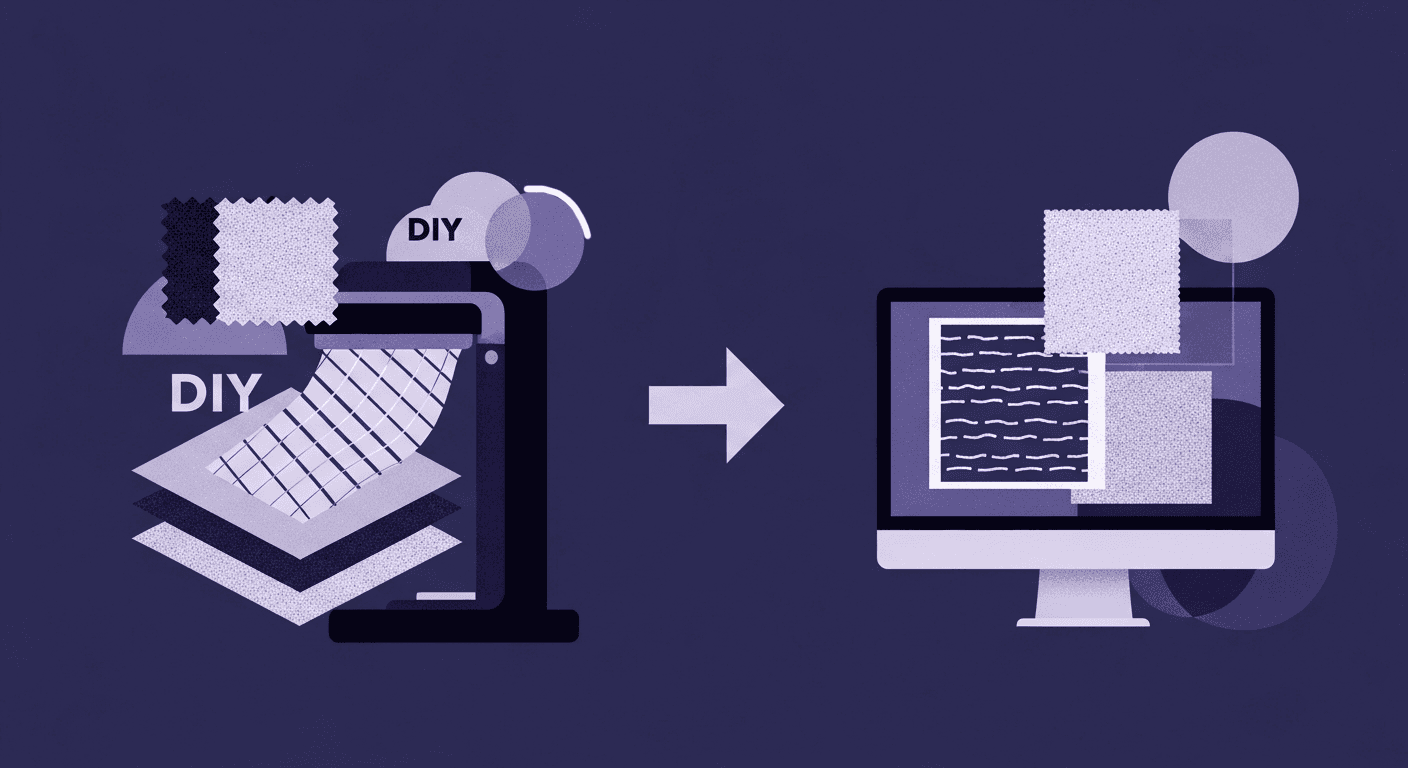
You can render thousands of textures in your 3D software, but you can’t feel a single one through the screen. And that’s the gap, isn’t it? The one between a perfect digital model and a physical sample that finally feels right. This guide is your hands-on lab for closing that gap. We’re moving past generic craft projects to give you a practical playbook for creating stunning textile textures from appliqué and smocking to slashing and distressing, and showing you how to translate that physical knowledge directly back into your digital workflow. Think of it as building your own private texture library, one based on real-world feel, not just a JPEG. When you understand why a fabric folds or frays a certain way because you’ve done it yourself, your digital creations become smarter, more accurate, and frankly, more impressive.
Understand the building blocks of textile texture
Before you can create or replicate fabric textures, whether physically or digitally, you need to understand what gives textiles their character in the first place. Texture isn’t just a visual effect you see on a screen; it’s the outcome of fiber type, weave, finish, and the way the material interacts with light and touch. By breaking texture into its core building blocks, you’ll learn why certain fabrics naturally look rough, smooth, glossy, matte, or structured, and how these differences influence both physical craftsmanship and digital rendering. This foundational knowledge is what allows you to design textures that don’t just look realistic, but feel believable in 3D environments and real-world prototypes.
Choose the right fabrics for textural DIY projects
So, where do you start? With the right material. Not all fabrics are created equal when it comes to texture. Some bring their own personality to the party, while others are blank slates ready for you to work your magic. Thinking about them in two camps simplifies things.
1. Fabrics with inherent texture: These materials do the heavy lifting for you. They have a natural, built-in feel that provides an instant starting point.
- Linen: Known for its earthy, slightly coarse feel and organic wrinkles. It’s breathable and gets softer with every wash.
- Wool: From chunky and rugged to fine and soft, wool offers a spectrum of warmth and fuzziness. Think felt, tweed, and boiled wool.
- Burlap/Jute: Very coarse and rustic. Perfect for a raw, natural aesthetic, but not ideal for anything that needs to be soft against the skin.
- Terry cloth: Features loops that make it highly absorbent and give it that classic towel texture.
2. Fabrics for manipulation: These are your go-to canvases. They are stable, predictable, and forgiving, perfect for adding texture through techniques like pleating, embroidery, or smocking.
- Cotton (Voile, Muslin, Canvas): The ultimate workhorse. It’s easy to sew, holds a crease well, and can be stitched, slashed, or gathered without much fuss.
- Felt (Wool or Synthetic): Because it doesn’t fray, felt is incredible for appliqué and creating clean, cut-out shapes. It’s soft, dense, and great for building up layers.
- Silk: Its smoothness provides a beautiful contrast to added textures. It gathers and pleats into soft, flowing forms. Use a fine needle to avoid snags.
- Denim: Sturdy and durable, denim is amazing for distressing, fraying, and more rugged appliqué work.
Here’s a quick cheat sheet for matching fabric to technique:
| Technique | Best Fabric Choices | Why It Works |
|---|---|---|
| Embroidery/Appliqué | Cotton Canvas, Felt, Denim | Sturdy and stable, preventing puckering. Felt won't fray. |
| Pleating/Gathering | Cotton Voile, Silk, Linen | Lightweight fabrics that hold a crease or gather beautifully without bulk. |
| Smocking/Shirring | Gingham, Lightweight Cotton | The grid on gingham is a built-in guide. Lightweight fabrics gather tightly. |
| Fraying/Distressing | Denim, Linen, Loosely Woven Cotton | These fabrics have visible weaves that come apart easily for a controlled, frayed edge. |
Gather your essential tools for fabric manipulation crafts
You don’t need a whole studio to get started, but the right tools make the process smoother and the results cleaner. Think of it in two tiers: the must-haves and the nice-to-haves.
The core kit: These are your non-negotiables.
- Good scissors: A sharp pair of fabric shears is a game-changer. Don't use them on paper. Ever. A smaller pair for snipping threads is also key.
- Needles: A variety pack is your best friend. You'll need different sizes for different fabrics and threads, from fine needles for silk to thicker ones for denim or canvas.
- Threads: Start with a few neutral colors (black, white, grey) and some embroidery floss. The weight and finish of the thread are part of the texture, too.
- Embroidery hoop: Essential for keeping your fabric taut when doing any kind of decorative stitching. It prevents puckering and gives you much more control.
- Measuring tape & ruler: For precision in pleating, gathering, and layout.
Specialized tools for a deeper dive: Once you’re hooked, these tools open up new possibilities.
- Pleating board: If you get serious about creating perfect, crisp pleats, this tool is fantastic for getting consistent results quickly.
- Smocking machine: For those who love the look of smocking but want to scale it up, a pleater or smocking machine creates the foundational gathers automatically.
- Rotary cutter & cat: Faster and more accurate than scissors for cutting straight lines, especially when working with multiple layers.
- Seam ripper: Because we all make mistakes. A good seam ripper is your best friend for fixing them without damaging your fabric.
With your materials and tools sorted, you're ready to move from planning to doing. Next up, we'll dive into the techniques that transform flat cloth into something with dimension and life.
Master key textile texture techniques
This is where the fun begins. We’re moving beyond the fabric itself and starting to impose our own creative will on it. These textile texture techniques fall into three main families: adding to the surface, shaping the fabric's form, and taking parts away.
Technique 1: Create texture through addition and layering
Think of your base fabric as a canvas. This approach is all about building dimension on top of it. It’s one of the most intuitive ways to explore fabric crafting.
- Appliqué: This is the art of stitching smaller pieces of fabric onto a larger one. You can create images, patterns, or abstract layers. Don’t just stick to cotton, try applying bits of felt, leather, or even unconventional materials to create a tactile collage.
- Couching: Instead of pulling a thick thread through the fabric, you lay it on the surface and stitch over it with a thinner thread. This lets you add chunky yarns, ribbons, or cords to your design, creating bold, raised lines that are both visual and tactile.
- Embroidery: This is the classic. But think beyond simple stitches. French knots create dense, bumpy clusters. Satin stitch makes smooth, raised shapes. Chain stitch builds rope-like lines. The stitch itself becomes a micro-texture.
Pro Tip: Don’t be afraid to mix materials. A single piece can feature appliqué felt circles, couched yarn lines, and embroidered French knots. This layering is what creates truly unique and complex tactile effects. The interplay between a smooth fabric, a chunky yarn, and a dense knot is what makes a piece interesting to touch.
Technique 2: Manipulate texture through fabric forming
Here, we’re not adding anything new. Instead, we’re sculpting the fabric itself. These structural methods use tension and stitching to create rhythmic, often geometric, patterns with real depth.
- Pleating: Creating folds in the fabric that are pressed or stitched in place. From tiny, sharp accordion pleats to wider, soft box pleats, this technique creates a pattern of light and shadow that has a structured, architectural feel.
- Gathering & ruffles: Simply put, you stitch a loose running stitch along a line and pull the thread to bunch up the fabric. This creates soft, organic volume. It’s the foundation of ruffles and a way to add fullness and a gentle texture.
- Smocking: This is a more advanced form of gathering. You start by creating a grid of dots on your fabric, gathering it into tight pleats, and then embroidering over the top of the pleats to hold them in place. The result is a section of fabric that is both textured and elastic.
- Shirring: This involves using elastic thread in your sewing machine's bobbin. As you sew, the elastic pulls the fabric into fine, even gathers. It’s often used in clothing to create stretchy, comfortable fits, but it’s also a fantastic way to create a uniform, crinkled texture across a large surface.
These forming techniques are powerful because the texture is integral to the fabric; it's not just sitting on top. It changes the way the material drapes, stretches, and feels.
Technique 3: Develop texture through subtraction and deconstruction
Sometimes, the most interesting textures come from taking something away. These methods give your work a raw, organic, or even aged feel. It’s about revealing the hidden structure of the fabric.
- Fraying: By pulling threads away from a cut edge, you can create a soft, fringed border. This works best on loosely woven fabrics like linen or denim, where the threads are easy to separate.
- Slashing: This involves layering two or more fabrics, stitching parallel lines through all layers, and then carefully cutting or slashing the top layers between the lines of stitching. After a wash, the cut edges fray beautifully, revealing the colors underneath and creating a chenille-like texture.
- Distressing: This can be anything from gentle sanding to create a worn look on denim to strategically cutting small holes or snags. It adds history and character to the fabric.
Common Mistake: Going too far, too fast. It’s easy to over-distress a piece and weaken the fabric’s integrity. The key is to start slow. Make a few frays or a small slash. Step back and look at it. You can always add more, but you can't undo a cut. Control is the name of the game.
Now that you have a toolbox of techniques, it's time to put them into practice. We'll start with a simple project that lets you experiment freely.
Launch your first DIY textile texture projects
Theory is great, but muscle memory is better. The best way to understand these techniques is to use them. We’ll walk through three DIY textile texture projects, starting with a low-stakes creative playground and moving toward something more functional.
Start simple: A tactile wall hanging or art piece
A wall hanging is the perfect first project. Why? There are no rules about function. It doesn’t need to be durable, washable, or a specific size. It’s a canvas for pure experimentation.
- Choose a base: Pick a sturdy piece of fabric for your foundation, like a foot-long square of cotton canvas or heavy linen.
- Create a composition: Lightly sketch out a few shapes. Don't overthink it; simple blocks of color or abstract lines work perfectly. This is just a map.
- Start experimenting: Assign a different technique to each shape. Maybe one area is filled with embroidered French knots. Another could feature appliqué felt circles. Try couching a thick yarn along one of the lines you drew. Add a frayed linen patch.
- Assemble and finish: Once you're happy with your textured canvas, you can hem the edges and attach it to a simple wooden dowel for hanging.
This project gives you a chance to see how different textures look and feel next to each other. You’ll quickly learn what you enjoy making and what effects you’re drawn to. It’s your personal texture sampler.
Level up: Incorporate texture into home decor projects
Ready for a bit more structure? Applying your skills to home decor is the perfect next step. Here, you have to balance aesthetics with function.
- Pillow covers: A throw pillow is a fantastic way to add a pop of tactile interest to a room. You could create a central panel of pleats, a corner of heavy embroidery, or an all-over smocked texture. Just remember the hug test: choose textures that feel good to lean against. Avoid anything too scratchy or delicate.
- Table runners: These are great for playing with linear designs. Try a band of slashing down the center or frayed edges on both ends. Since runners need to be washable, make sure your chosen techniques and materials can handle a trip through the laundry.
- Throw blankets: Think about adding texture to the borders. You could add a chunky fringe, an appliquéd edge in a contrasting fabric like felt, or even stitch on textured patches. Durability is key here, so secure all your stitches well.
Working on home goods forces you to think like a designer solving a problem: How can I make this beautiful and practical? It’s a great bridge to more complex projects.
Challenge yourself: A wearable art accessory
This is where your DIY practice connects directly back to the world of fashion. Creating a wearable accessory challenges you to think about drape, comfort, and how a texture interacts with the body.
- A textured scarf: Start with a simple length of fabric and make it extraordinary. You could use the slashing technique on layered silk for a soft, chenille-like feel, or cover the ends with dense embroidery and beading.
- A statement bag or clutch: A bag is a small, structured canvas perfect for textural play. A simple tote can be elevated with appliquéd leather shapes, while a clutch could feature a panel of intricate smocking.
- A detachable collar: These are very on-trend and a perfect small-scale project. You can create a highly textured piece with pleats, ruffles, and embroidery that can transform a simple sweater or dress.
This isn’t just about making an accessory; it’s about creating a prototype. You’re testing how a texture performs when it moves and is worn. This is invaluable research for any fashion professional.
Refine and sustain your craft
Once you’ve mastered the basics and built a few projects, the final step is to integrate this hands-on knowledge back into a professional workflow. This is how your craft becomes a powerful tool for innovation, not just a hobby.
Translate physical textures for digital design workflows
How do you take these beautiful, tactile samples and make them useful in a digital pipeline? You create your own physical-to-digital texture library.
- Document everything: Photograph your samples. This isn’t a quick phone snap. Light them properly to capture the shadows and highlights that define the texture. Shoot them straight-on for a seamless tile, but also at an angle to show depth. Place a ruler in some shots for scale.
- Create digital assets: Use an AI tool like Texurly to turn your photos into seamless, tileable textures. Adjust the lighting, desaturate for bump or normal maps, and save them with clear, descriptive names (e.g., Cotton_Voile_Accordion_Pleat_1cm.jpg).
- Use them in 3D: Import these custom textures into your 3D design software, like Clo3D or Browzwear. Seeing your own physical texture sample mapped onto a digital garment is a massive unlock. It makes your 3D renders more accurate, persuasive, and grounded in reality. You’re no longer just picking from a default library; you’re designing with materials you’ve actually created.
This process creates a powerful feedback loop. Your hands-on work informs your digital designs, and your digital mockups can inspire new physical experiments. It’s the bridge between craft and cutting-edge technology.
Use eco-friendly ways to work with textile textures
Finally, let’s talk about sustainability. This isn't just a trend; it's a fundamental principle of modern design. And working with textures is a perfect opportunity to practice it.
- Upcycle old garments: A worn-out pair of jeans is a goldmine for distressing and fraying techniques. An old silk blouse can be cut up for appliqué or gathered into ruffles. You’re not just saving material from the landfill; you’re working with fabric that already has a history and character.
- Embrace fabric scraps: Never throw away your off-cuts. Small pieces are perfect for appliqué, patchwork, and creating textured collages. Set up a scrap bin sorted by color or material. This limitation can be a creative catalyst. A project made entirely from scraps has a unique, resourceful aesthetic that you can’t get any other way.
- Natural dyes: Before you even start with texture, consider dyeing your fabric with natural, low-impact dyes made from things like avocado pits, onion skins, or black beans. This adds another layer of organic, one-of-a-kind artistry to your work.
By weaving sustainability into your creative process, you’re not only reducing waste but also developing a more thoughtful and innovative design practice. You learn to see potential in what others discard, a skill that’s invaluable in any creative field.
Your new design superpower: texture
So, let’s go back to that gap between the screen and the physical sample. After this, it’s not really a gap anymore, is it? It’s your new playground.
What started with a piece of fabric and a needle is now a powerful, practical advantage in your professional workflow. The next time you’re in a design review, you won’t just be showing a render of a garment; you’ll have the physical proof to back it up. You can present a 3D model with a smocked waistband and then pass around the actual textured sample you created. That’s the connection. That’s how you make a digital concept feel real and get buy-in from your team.
This isn’t just about making things, it’s about building your own library, one that makes your digital work more convincing, your prototypes smarter, and your vision clearer. You’ve got the skills. Now go make something they can feel.

Max Calder
Max Calder is a creative technologist at Texturly. He specializes in material workflows, lighting, and rendering, but what drives him is enhancing creative workflows using technology. Whether he's writing about shader logic or exploring the art behind great textures, Max brings a thoughtful, hands-on perspective shaped by years in the industry. His favorite kind of learning? Collaborative, curious, and always rooted in real-world projects.
Latest Blogs

The Indie Dev Guide to CC0 PBR Textures: Stop Searching, Start Cr...
PBR textures
AI in 3D design

Mira Kapoor
Jul 10, 2026
Sourcing Free Game Textures: Navigating PBR Pipelines and Stylize...
PBR textures
Game textures
Mira Kapoor
Jul 6, 2026

Sculpting with Sunlight: The Architectural Physics of Facade Text...
Texture creation
AI in 3D design

Max Calder
Jul 1, 2026

Accelerate you workflow
with automated PBR texture generation
Enjoy creative freedom with AI powered texture creation
 Texturly
Copyright © 2026 Texturly, Asha Technology Labs Pvt. Ltd. All rights reserved