What 5 Textured Plastic Case Studies Reveal About Functional Design
By Mira Kapoor | 16 February 2026 | 14 mins read
Table of contents
Table of Contents
Texture is often the last thing on the product development checklist. It's a finish picked from a catalog, a final touch before tooling kicks off. But what if that simple oversight is the difference between a good product and a great one? This article moves texture from an afterthought to a strategic tool. We’re unpacking a series of cross-industry textured plastic products case studies to show you how surface engineering solves real-world challenges, from preventing glare in a car to ensuring a surgeon’s grip. Forget the spec sheets for a minute; the real insights are in these stories.
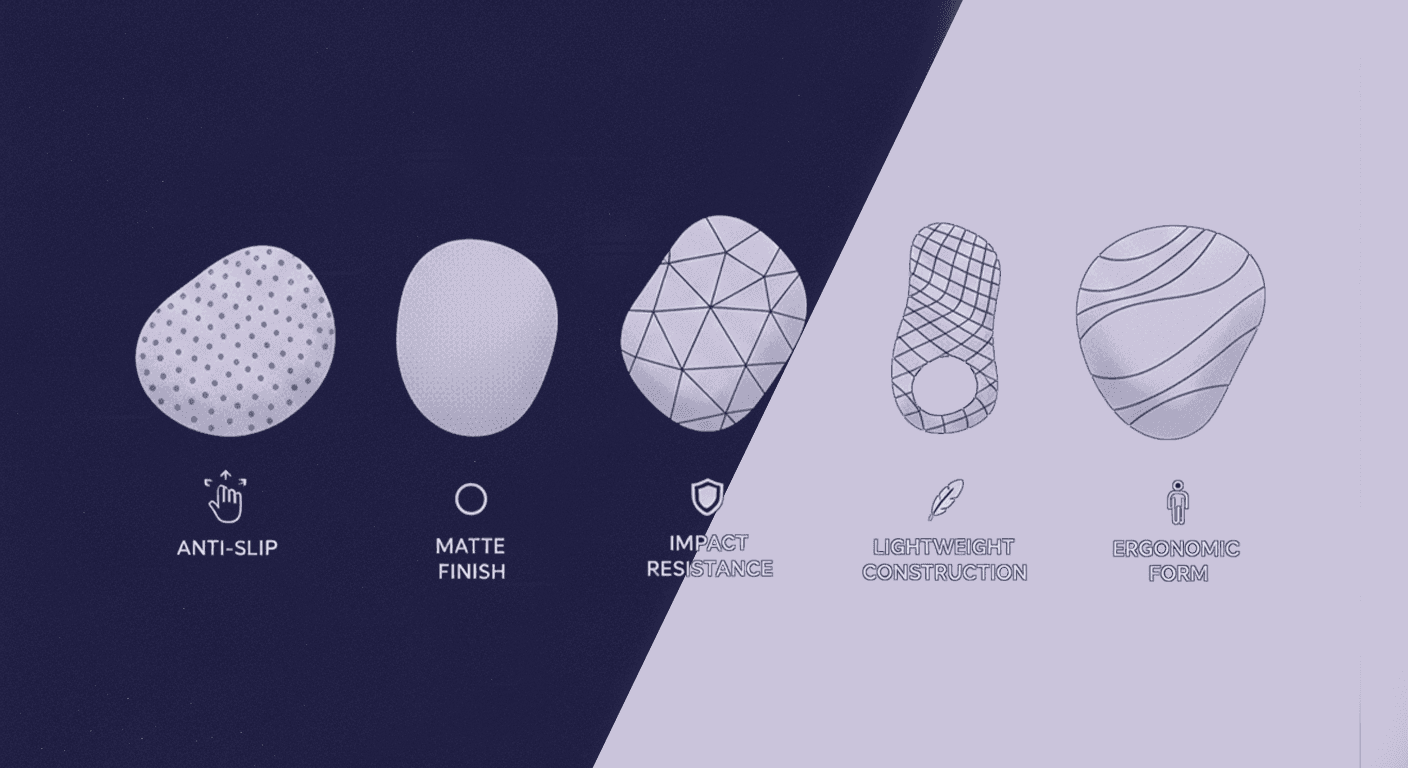
Moving beyond surface-level texture
Most teams treat texture as a final touch, a finish applied at the end of the design process. It’s a common mistake, and it’s costing them. When texture is just an aesthetic choice, you miss its real power. It’s a functional component that can solve deep engineering challenges, streamline manufacturing, and define how a user feels about your product.
But how do you move texture from an afterthought to a strategic pillar? You stop looking at spec sheets and start unpacking real-world applications.
Why case studies are your best tool for design
Whitepapers and data sheets give you the what, the material properties, the tensile strength, the chemical resistance. But textured plastic products case studies give you the why and the how. They unpack the entire narrative, from the initial design challenge to the realities of mass production.
Think of it this way:
- They reveal the trade-offs. No material or process is perfect. A case study shows you the compromises made between tactile feel and durability, or between manufacturing speed and surface complexity. You get to see the real-world balancing act.
- They connect the problem to the process. You don’t just learn that a specific texture reduces glare. You learn that it was achieved through laser ablation on the injection mold tool, which required a specific grade of steel and a particular polymer, like a polycarbonate/ABS blend, to hold the detail without flow marks.
- They expose hidden constraints and opportunities. A case study might reveal that a company eliminated a costly, failure-prone painting process by switching to a molded-in texture. That’s a win that never shows up on a material data sheet.
Analyzing these stories is the fastest way to vet new ideas for your own product roadmap. Instead of just asking, “What material should we use?” you can start asking, “What problem did a similar product solve, and how did their surface engineering contribute?”
As we dive into the following examples, look for the patterns, the link between the industry’s core demand and the solution they landed on. That’s where the real innovation lies.
Case Study 1: Solving the grip-and-glare problem in automotive interiors
Automotive interiors are a battleground of competing requirements. They have to look and feel premium, withstand a decade of abuse from UV rays and cleaning chemicals, and meet stringent safety regulations. It’s a classic engineering challenge where the surface is everything.
The challenge: Balancing durability, safety, and a premium feel
Two key areas drive a significant portion of surface engineering decisions inside a car:
- Dashboard and instrument panels: These large surfaces sit directly under the windshield, creating a major potential for glare. Federal safety standards (like FMVSS 107 in the US) mandate low-gloss surfaces to prevent reflections that could distract a driver. At the same time, the texture can’t look cheap or feel like raw plastic.
- High-contact surfaces: Think steering wheels, gear shifts, and control knobs. These components must offer a secure, confident grip while resisting years of abrasion from hands, oils, and sanitizers. A worn-out steering wheel or a shiny, slick knob makes the entire vehicle feel old and poorly made.
Historically, the solution was a patchwork of secondary processes, soft-touch paints, wraps, and coatings. But these add cost, complexity, and potential points of failure. The paint can peel, the wraps can delaminate. The industry needed a more integrated solution.
The solution: Multi-layered textures and advanced material texturing techniques
The breakthrough came from treating the texture as part of the material and molding process itself. Instead of adding a layer on top, leading automakers and their suppliers began using advanced material texturing techniques directly on the injection mold tooling.
- For glare reduction: The go-to technique is laser etching or chemical etching of the mold surface. Engineers can now create complex micro-textures, patterns invisible to the naked eye, that scatter light in multiple directions. This diffusion is what kills the glare. A common pattern, like a Voronoi texture, is engineered to break up light without creating an obviously repeating visual pattern. The result is a low-gloss, premium matte finish that’s part of the physical object, not a coating. It will never peel or wear away.
- For tactile feedback: On high-contact points, the solution is often two-shot injection molding with specific polymer blends. For a control knob, the inner structure might be a rigid ABS plastic, but a second shot in the same mold overmolds it with a soft-touch Thermoplastic Elastomer (TPE). The texture on the TPE, whether it’s fine stippling or precise ribbing, is also created in the mold. This provides excellent grip and a premium feel without the adhesives or secondary assembly steps of a rubber wrap.
The outcome: A streamlined process and a superior cabin experience
This integrated approach fundamentally changed the economics and quality of interior manufacturing. By molding in the texture, automakers reduced their reliance on volatile organic compound (VOC)-heavy paints and coatings. This not only cut down on environmental impact but also eliminated entire steps from the assembly line, reducing cycle times and costs.
More importantly, the durability skyrocketed. A molded-in texture has the same lifespan as the part itself. For the end-user, this means a cabin that looks and feels new for longer, directly impacting the vehicle's perceived quality and resale value. The key takeaway is clear: functional material design isn’t just about the raw polymer; it’s about how you shape it at a microscopic level to solve a macroscopic problem.
Case Study 2: Designing for feel and function in consumer electronics
In the hyper-competitive world of consumer electronics, the unboxing and first touch can make or break a product. Texture is a primary vehicle for communicating quality, thoughtfulness, and brand identity. It’s the silent handshake between the device and the user.
The challenge: Creating a signature feel that communicates quality
For handheld devices, from smartphones and remotes to gaming controllers, the challenges are twofold:
- Ergonomics and grip: A device needs to feel secure and comfortable in the hand. A slippery, high-gloss surface feels cheap and precarious, increasing the odds of a catastrophic drop. The texture must provide just the right amount of friction without feeling abrasive.
- Aesthetic durability: Glossy plastics are fingerprint magnets and show every minor scuff and scratch. A product can start to look worn and dirty within days of leaving the box. The surface needs to gracefully hide the evidence of daily use.
Designers are tasked with creating a signature tactile experience that feels premium while also being robust enough to handle the rigors of everyday life.
The solution: Polymer texture modification for smart devices
Leading brands solve this with sophisticated polymer texture modification, achieved directly within the injection molding process. This isn’t about just picking a standard matte or glossy finish from a catalog. It’s about designing a custom micro-topography that serves both ergonomic and aesthetic goals.
Let’s take the example of a modern gaming controller. The design process is meticulous:
- The main body of the controller might use a very fine, bead-blasted texture in the mold. This creates a subtle matte finish on the ABS plastic that effectively hides fingerprints and feels smooth to the touch.
- On the underside of the grips, where the user’s palms rest, a more aggressive texture is needed. Here, designers often use laser-etched patterns, like arrays of tiny dots or a diamond pattern, to increase the surface area and create channels for air and moisture. This ensures a secure grip even during long, intense gaming sessions.
This level of detail is only possible because the texture is an integral part of the tooling. It allows for different textures to be applied to different faces of the same part within a single molding cycle. The result is a device that feels intentionally designed and perfectly suited to its purpose.
The outcome: Enhanced brand perception and longer product lifespan
By investing in high-quality mold texturing, brands directly link tactile quality to consumer satisfaction. A device that feels good in the hand is perceived as being of higher quality. It feels more substantial, more reliable. This positive first impression translates into better reviews, stronger brand loyalty, and a willingness to pay a premium.
From a practical standpoint, this approach answers the question of how textured plastics solve industry-specific design challenges. The right texture extends the aesthetic lifespan of the product. By resisting fingerprints and hiding micro-scratches, the device maintains its new look for much longer. This reduces user frustration and reinforces the value of their purchase over time. It’s a powerful lesson in how a seemingly minor detail, the surface of the plastic, can have a major impact on the entire product experience.
Case Study 3: Ensuring safety and usability in medical devices
Nowhere are the stakes for material science and surface engineering higher than in the medical field. For surgical tools, diagnostic equipment, and patient-monitoring devices, the surface isn’t about branding; it’s about patient safety, clinician confidence, and uncompromising reliability.
The challenge: Prioritizing grip, cleanability, and non-reactivity
Medical device designers face a unique and demanding set of constraints:
- Grip and haptics: Surgical instruments must be completely non-slip, even when handled with latex or nitrile gloves, and potentially covered in bodily fluids. A dropped instrument in an operating room is not an option.
- Cleanability and sterilization: Device surfaces must be non-porous and easy to clean, preventing the buildup of biofilms where bacteria can thrive. They also have to withstand harsh sterilization methods, like autoclaving (high-pressure steam), gamma radiation, or chemical baths (e.g., ethylene oxide), without degrading, cracking, or leaching chemicals.
- Biocompatibility: The materials must be non-reactive and non-toxic, ensuring they don’t cause an adverse reaction when in contact with a patient.
These requirements often pull in opposite directions. A heavy texture that improves grip can also create microscopic crevices that are difficult to clean.
The solution: Functional material design for critical applications
This is where functional material design becomes paramount. The solution lies in choosing high-performance polymers and pairing them with precisely engineered textures.
- Material selection: The first step is selecting a polymer that can handle the extreme environment. Materials like PEEK (Polyether ether ketone), Ultem (Polyetherimide), and medical-grade polycarbonates are chosen for their incredible chemical resistance and ability to withstand repeated sterilization cycles.
- Engineered surface topography: Instead of generic textures, medical device designers use specific industrial plastic surface technologies to create surfaces that are both grippy and cleanable. For instance, a handle on a surgical device might feature a pattern of smooth, rounded bumps or a shallow, wavy texture. This increases the coefficient of friction for a secure grip but avoids the sharp, deep crevices of a traditional knurled pattern. These smooth contours make it far easier to wipe down and ensure no contaminants are left behind.
Some advanced applications are even exploring textures at a near-nanoscale level, designed to mimic the surface of sharkskin, which has been shown to naturally resist microbial adhesion and biofilm formation.
The outcome: Improved patient safety and device reliability
When done right, the outcome is a dramatic improvement in safety and usability. A surgeon with a confident, secure grip on a tool is less prone to user error. A device that can be reliably and completely sterilized between uses directly reduces the risk of hospital-acquired infections. It’s a clear case where surface texture is not a feature but a critical safety component.
For any Research leader, the lesson from the medical industry is profound: material selection and surface engineering must be considered in the context of the product's entire lifecycle. How will the surface perform not just on day one, but after 100 sterilization cycles? The answer to that question defines true product reliability.
The playbook: Your strategic takeaways for cross-industry plastic innovation
Across automotive, electronics, and medical devices, a clear pattern emerges. The most innovative companies don’t just choose a texture; they design it. They treat the surface as an active component with a job to do, whether that’s diffusing light, improving grip, or resisting bacteria.
Connecting texture directly to business goals
Here’s the core takeaway that should change how your team operates: Texture isn’t a finish; it’s a functional decision that impacts cost, user experience, and safety.
This requires a fundamental shift in the product development workflow. The conversation about texture shouldn't start with the CMF (Color, Material, Finish) team at the end of the process. It needs to happen at the very beginning, during initial concepting and material selection. Why? Because the choice of polymer, the design of the mold, and the texturing method are all deeply intertwined. You can’t decide on one without considering the others.
When you move this conversation upstream, you stop seeing texture as an expense and start seeing it as an investment that can:
- Eliminate secondary processes like painting or coating.
- Reduce material costs by using a standard polymer with a premium molded-in feel.
- Improve product durability and reduce warranty claims.
- Create a stronger brand identity through a signature tactile experience.
How to build your own texture strategy
So, how do you put this into practice? Start by building a simple evaluation framework for your next project. Before you settle on a material or finish, run it through this checklist.
A checklist for evaluating texture options:
1. Functional goal: What is the primary job of this surface?
- Examples: Reduce glare, increase grip, hide fingerprints, resist abrasion, guide the user's hand, and be easy to clean.
2. Material compatibility: Does the chosen polymer support the desired texture?
- Consider: Some soft materials (like TPEs) excel at haptic feedback, while harder plastics (like PC) can hold extremely fine, crisp details for light diffusion.
3. Manufacturing feasibility: Can this texture be reliably produced at scale?
- Think about: What is the impact on mold design and cost? Does it increase cycle time? Is the draft angle sufficient to prevent the part from sticking in the mold?
4. Lifecycle durability: How will this texture look and feel after three years of real-world use?
- Simulate: Will it trap dirt? Will it wear down and become shiny? How does it stand up to common cleaning agents?
Finally, use this framework to have a more strategic conversation with your manufacturing partner. Don’t just send them a design and ask for a quote. Ask them about their capabilities.
Questions to ask your manufacturing partner:
- What are your in-house capabilities for manufacturing surface treatments? (e.g., laser etching, chemical etching, bead blasting).
- Can you show us samples of different texture classes on our chosen polymer?
- How do you ensure texture consistency from the first part to the millionth?
- What are the design limitations (like draft angles and feature depth) for the textures you can produce?
By arming yourself with this strategic approach, you transform texture from a line item on a spec sheet into a powerful tool for building better, more successful products.
Your turn: From insight to impact
So, what’s the real takeaway after all these examples? It’s this: Stop treating texture like paint. Start treating it like a component.
You’ve seen how automotive designers use it to solve safety-critical glare issues, how electronics brands build their entire tactile identity with it, and how medical engineers rely on it for cleanability and grip. These aren’t just interesting stories; they’re a blueprint for a smarter conversation within your own team.
The next time you kick off a project, bring the texture discussion into the first meeting, not the last one. Use that checklist. Ask your manufacturing partner those tough questions before the design is locked. Because when the surface is engineered with the same rigor as the circuit board inside, you don’t just build a better product. You build one that feels inevitable.

Mira Kapoor
Mira leads marketing at Texturly, combining creative intuition with data-savvy strategy. With a background in design and a decade of experience shaping stories for creative tech brands, Mira brings the perfect blend of strategy and soul to every campaign. She believes great marketing isn’t about selling—it’s about sparking curiosity and building community.
Latest Blogs

The Indie Dev Guide to CC0 PBR Textures: Stop Searching, Start Cr...
PBR textures
AI in 3D design

Mira Kapoor
Jul 10, 2026
Sourcing Free Game Textures: Navigating PBR Pipelines and Stylize...
PBR textures
Game textures
Mira Kapoor
Jul 6, 2026

Sculpting with Sunlight: The Architectural Physics of Facade Text...
Texture creation
AI in 3D design

Max Calder
Jul 1, 2026

Accelerate you workflow
with automated PBR texture generation
Enjoy creative freedom with AI powered texture creation
 Texturly
Copyright © 2026 Texturly, Asha Technology Labs Pvt. Ltd. All rights reserved