The Features That Actually Matter in Online Pattern Generators
By Mira Kapoor | 20 February 2026 | 11 mins read
Table of contents
Table of Contents
You’ve spent hours perfecting a garment's drape in CLO3D, only to get stuck scrolling through the same tired stock prints for a fabric that’s almost right. It’s a workflow bottleneck that kills creative momentum. We've sorted through the noise to find the five best online pattern generators that act as a true creative partner, unpacking the right tools for the job, from AI concept engines for initial ideas to production powerhouses for final, realistic materials. This is about moving beyond the limitations of traditional textile design and getting back to what matters: designing.
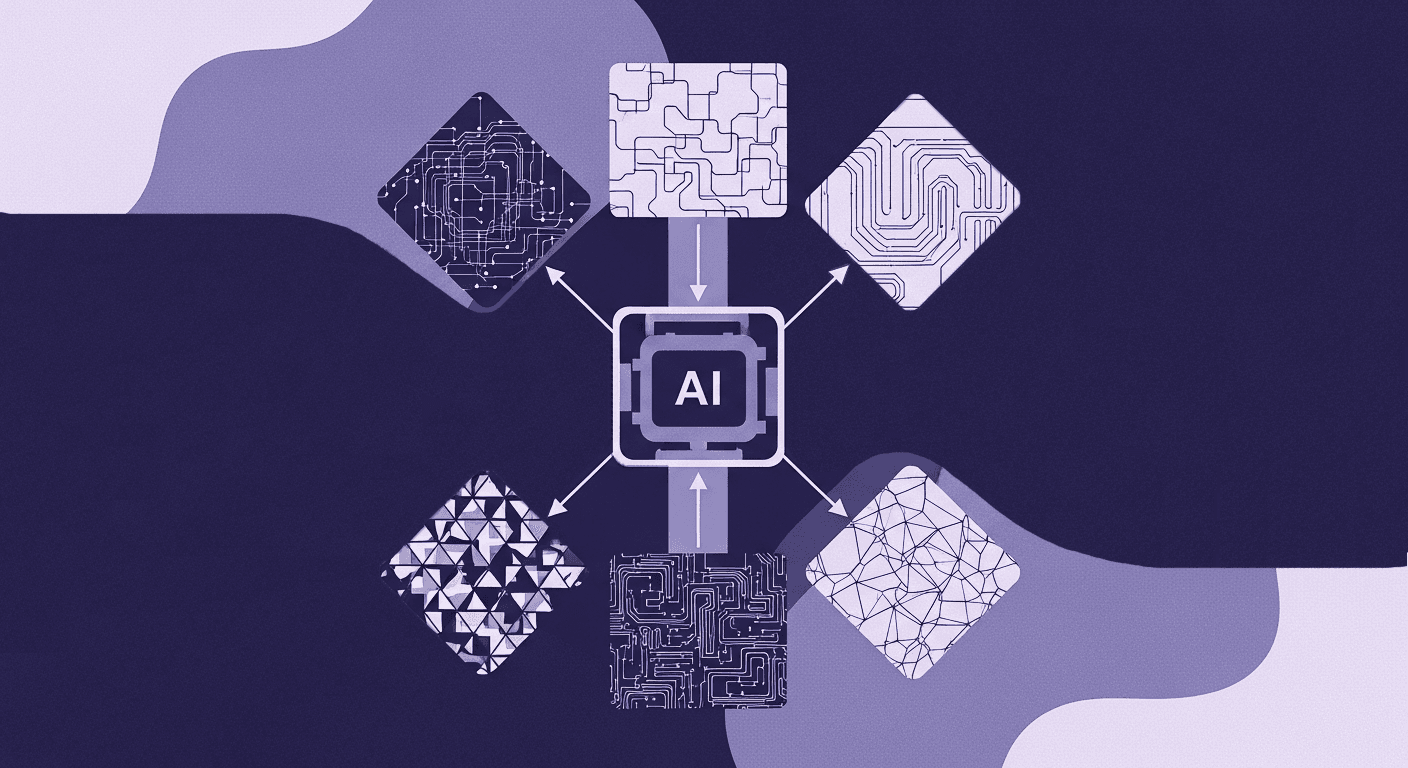
Why online pattern generators are a game-changer for 3D apparel designers
Hunting for the perfect fabric print can kill your creative momentum. You spend hours scrolling through stock libraries or tweaking the same old paisley for the hundredth time. It’s a workflow bottleneck that pulls you out of the design space and into the tedious task of texture hunting. For 3D apparel designers using powerful tools like CLO3D or Browzwear, this friction is more than just an annoyance; it’s a drag on innovation.
This is where online pattern generators shift the entire process. They’re not just about making pretty backgrounds. They’re about speed, iteration, and creative leverage. Instead of searching for a pattern that might work, you can generate one that’s tailored to your exact vision in minutes. Think of it as an assistant that can spitball hundreds of visual ideas, letting you focus on the silhouette, drape, and construction of your garment.
These tools streamline the concepting phase by allowing you to create unique, production-ready textures and prints with terrifying efficiency. Want a print that blends art deco geometry with bioluminescent fungi? A simple text prompt can get you there. Need to turn a photo of rusted metal into a seamless, realistic 3D fabric? There’s a tool for that, too. This is about moving beyond the limitations of traditional textile design and directly into a world where your imagination is the only constraint.
Top 5 online pattern generators for fashion design
We’ve sorted through the noise to find the tools that deliver real value for a professional 3D apparel workflow. Some are for sparking initial ideas, while others are built for creating final, production-grade materials. Here’s the breakdown of what to use and when.
1. Midjourney for AI-powered creative exploration
Midjourney is less of a pattern generator and more of a visual concept engine. It operates within Discord and uses text prompts to create stunningly realistic or wildly abstract images. For a 3D apparel designer, its power lies in its ability to generate textures and fabric ideas that you simply can’t find anywhere else.
It’s best for the initial stages of design, such as mood boards and concept development. You can explore dozens of fabric directions in the time it takes to brew a cup of coffee. Want to see what a satin charmeuse with an iridescent, beetle-wing finish looks like? Just ask it. The results are often surprising and can push your creative boundaries.
Workflow Tip: Midjourney doesn’t natively create seamless tiles (though you can try with the tile parameter). The smartest way to use it is to generate a high-resolution, non-repeating image that captures the essence of your desired fabric. Then, take that image into a dedicated tiling tool like Repper or Texturly to build the final, production-ready asset. This two-step process gives you both world-class creative direction and technical precision.
2. Texturly for realistic, production-ready material creation
If Midjourney is your creative spark, Texturly is your production powerhouse. Built as an AI-powered SaaS platform for texture generation, Texturly is designed specifically for turning inspiration into fully usable 3D-ready materials without requiring heavy desktop software or a steep learning curve.
Texturly supports both prompt-to-texture and image-to-tileable texture workflows. You can start from a simple text description or upload any base image, a fabric photo, a Midjourney render, or a scanned swatch, and Texturly automatically converts it into a seamless, tileable texture. More importantly, it doesn’t stop at just the base color. It generates the full set of PBR maps, including Normal, Roughness, Height, and Metallic, giving your fabrics realistic depth, surface breakup, and light interaction inside CLO3D or Browzwear.
What makes Texturly especially powerful for apparel designers is the level of creative control it adds on top of automation. Before downloading, you can fine-tune your texture using built-in adjustment filters such as brightness, contrast, saturation, and sharpness, allowing you to dial in the exact fabric mood without bouncing between multiple tools.
This makes Texturly ideal for designers who want speed without sacrificing realism. Instead of juggling complex material authoring software, you get a clean, browser-based workflow that takes you from concept image to production-ready fabric in minutes, perfectly suited for virtual sampling, digital showrooms, and 3D garment prototyping.
3. Patternful for fast and free vector patterns
Sometimes you don’t need a photorealistic, complex texture. You just need a clean, scalable geometric pattern for a lining, a simple print, or a background in a tech pack. For that, Patternful is an excellent, no-fuss choice.
This browser-based tool is incredibly easy to use. You can generate a wide variety of customizable, seamless vector patterns with just a few clicks. Adjust the colors, scale, and elements until you have exactly what you need, then export it as an SVG, PNG, or JPG. Because it generates vector patterns, the results are infinitely scalable without any loss of quality, a huge plus for maintaining crisp lines at any resolution.
Its use case is straightforward: when you need a clean, minimalist, or abstract pattern fast, this is your tool. It’s ideal for creating a simple polka dot, stripe, or herringbone pattern that just works, letting you move on to more complex design challenges without getting bogged down.
4. Repper for precise tiling and geometric control
Repper is a specialist. It does one thing, and it does it exceptionally well: creating beautiful, intricate, and perfectly seamless patterns from a source image. This is the tool for the designer who loves control and wants to explore the hidden geometric possibilities within an image.
You start by uploading an image, which could be a photograph, a digital illustration, or an AI-generated image. Repper then gives you a set of powerful tiling options, from simple repeats to complex kaleidoscopic effects. You can move the selection box around your source image in real-time to see how it affects the final pattern, making the process intuitive and highly creative. It’s surprisingly mesmerizing.
This tool is best for designers who want to create highly detailed, symmetrical, or geometric patterns with a level of precision that’s difficult to achieve by hand. If you have a specific source image you love (like that Midjourney render) and want to turn it into a flawless repeating tile for fabric application, Repper gives you the fine-tuned control to get it right.
5. Fotor AI pattern generator for accessible AI creation
If you find Midjourney’s Discord-based interface a bit intimidating, Fotor’s AI Pattern Generator is a much more user-friendly entry point into AI-driven design. It’s one of the best free pattern generator tools online for quickly experimenting with text-to-pattern creation without a steep learning curve.
Much like other AI image tools, you can use simple text descriptions to generate patterns from scratch or upload your own image as a starting point. While it may not have the raw creative power or photorealism of Midjourney, its accessibility makes it perfect for quick brainstorming sessions or for designers who are just beginning to explore AI pattern creation.
Fotor is great for generating simpler, more graphic-style patterns. It’s a fantastic sandbox for testing out ideas without committing to a more complex tool. Use it to quickly mock up a conversational print or a simple abstract texture before investing time in a more detailed workflow.
How to choose the right pattern design tool
Having options is great, but picking the right tool for the job is what keeps you efficient. Your choice should come down to your specific goal at that moment. Here’s a simple framework to help you decide.
- For concepting vs. production: First, ask yourself: Am I brainstorming, or am I building a final asset? For pure, blue-sky concepting, use an AI generator like Midjourney or Fotor. Their job is to give you a wealth of ideas. For creating the final, production-ready digital fabric with all the necessary texture maps, Texturly is the industry standard.
- Seamless tiling: Is built-in seamless functionality a must-have? This is critical for 3D workflows, as a visible seam on a 3D garment immediately breaks the illusion. Texturly, Repper, and Patternful are all built around creating perfect tiles. Midjourney and Fotor can attempt it, but you'll often need to bring their outputs into a dedicated tiler for a flawless result.
- File format: What kind of file do you need? For crisp, scalable graphics perfect for logos or simple prints, you need a vector format (SVG), which makes Patternful the right choice. For rich, photorealistic textures, you’ll need high-resolution PNGs or JPGs. And for true 3D realism in software like CLO3D, you need the full suite of PBR texture maps (Normal, Roughness, etc.) that only a tool like Texturly can provide.
- Level of control: How hands-on do you want to be? If you prefer to direct a creative partner, then the AI prompt-based workflow of Midjourney or Fotor is for you. You guide the vision with words. If you’d rather have manual, parameter-based control over every element of the final repeat, then a tool like Repper or the detailed sliders in Texturly will fit your workflow better.
Integrating these tools into a 3D design workflow
You don’t need to pick just one tool. The fastest and most creative workflows often involve chaining a few of them together. Each tool plays a specific role, handing off the asset to the next specialist in the pipeline. Here’s a practical, step-by-step approach.
- Start with an AI concept. Fire up Midjourney, Texturly, or Fotor. Don’t worry about perfection or tiling yet. Focus on generating a visually rich image that captures the mood, color palette, and texture you’re after. Use descriptive prompts like macro photograph of decaying velvet, baroque style, moody lighting, dark floral, to get a strong base concept.
- Refine and make it seamless. Once you have an image you love, bring it into a dedicated pattern tool. If you need intricate geometric control, use Repper to create a mesmerizing, perfectly tiled version. If your goal is realism, import it into Texturly. Here, you’ll not only make it seamless but also generate the critical PBR maps that will make the fabric look real in your 3D environment.
- Export and apply. From your refinement tool, export the final texture maps. At minimum, you’ll want the base color (albedo) and a normal map. For extra realism, include roughness and metallic maps. Then, simply import these textures into your 3D apparel software like CLO3D and apply them as a new fabric. The result is a completely unique, custom-designed material that started as a simple idea just a few minutes earlier.
This workflow lets you move from a vague concept to a fully realized digital fabric with incredible speed. It’s about using the right tool for each stage, letting AI handle the broad creative strokes and letting specialized software nail the technical details. Less clicking around, more time designing.
Your new texture department
So, let's go back to that bottleneck, the endless hunt for the perfect fabric. The real takeaway here isn't just a list of five cool websites. It's the blueprint for an entirely new workflow, one where you're the creative director of your own texture department.
Think of it like this:
- Midjourney is your tireless concept artist, sketching hundreds of ideas.
- Repper and Patternful are your technical designers, perfecting the repeat.
- Texturly is your production floor, turning a flat image into a tangible, realistic material.
This isn’t about replacing your skills; it’s about amplifying them. The next time a specific vision for a fabric pops into your head, you don’t have to compromise with what’s available. You can build it, test it, and apply it in CLO3D in a matter of minutes.
You’ve got the eye. Now you have the engine. Go design something no one has seen before.

Mira Kapoor
Mira leads marketing at Texturly, combining creative intuition with data-savvy strategy. With a background in design and a decade of experience shaping stories for creative tech brands, Mira brings the perfect blend of strategy and soul to every campaign. She believes great marketing isn’t about selling—it’s about sparking curiosity and building community.
Latest Blogs
The Indie Dev Guide to CC0 PBR Textures: Stop Searching, Start Cr...
PBR textures
AI in 3D design

Mira Kapoor
Jul 10, 2026
Sourcing Free Game Textures: Navigating PBR Pipelines and Stylize...
PBR textures
Game textures
Mira Kapoor
Jul 6, 2026
Sculpting with Sunlight: The Architectural Physics of Facade Text...
Texture creation
AI in 3D design

Max Calder
Jul 1, 2026

Accelerate you workflow
with automated PBR texture generation
Enjoy creative freedom with AI powered texture creation
 Texturly
Copyright © 2026 Texturly, Asha Technology Labs Pvt. Ltd. All rights reserved