Why Walnut and Oak Veneer Textures Define Your Design Strategy
By Max Calder | 1 June 2026 | 14 mins read
Table of contents
Table of Contents
Still picking wood veneers based on vague dark or light descriptions, hoping your renders will somehow capture the true essence? We've all been there, that moment when generic material choices just don't cut it for your refined industrial designs. It’s time to move beyond guesswork. This guide isn't just about wood; it’s your deep dive into walnut and oak veneer textures, unpacking the distinct visual, structural, and functional properties that will elevate your product aesthetics and streamline your design workflow. For industrial designers, understanding these species-specific nuances is the key to faster, better-informed material decisions, achieving photorealistic renders, and crafting products that resonate with both brand vision and eco-friendly practices.
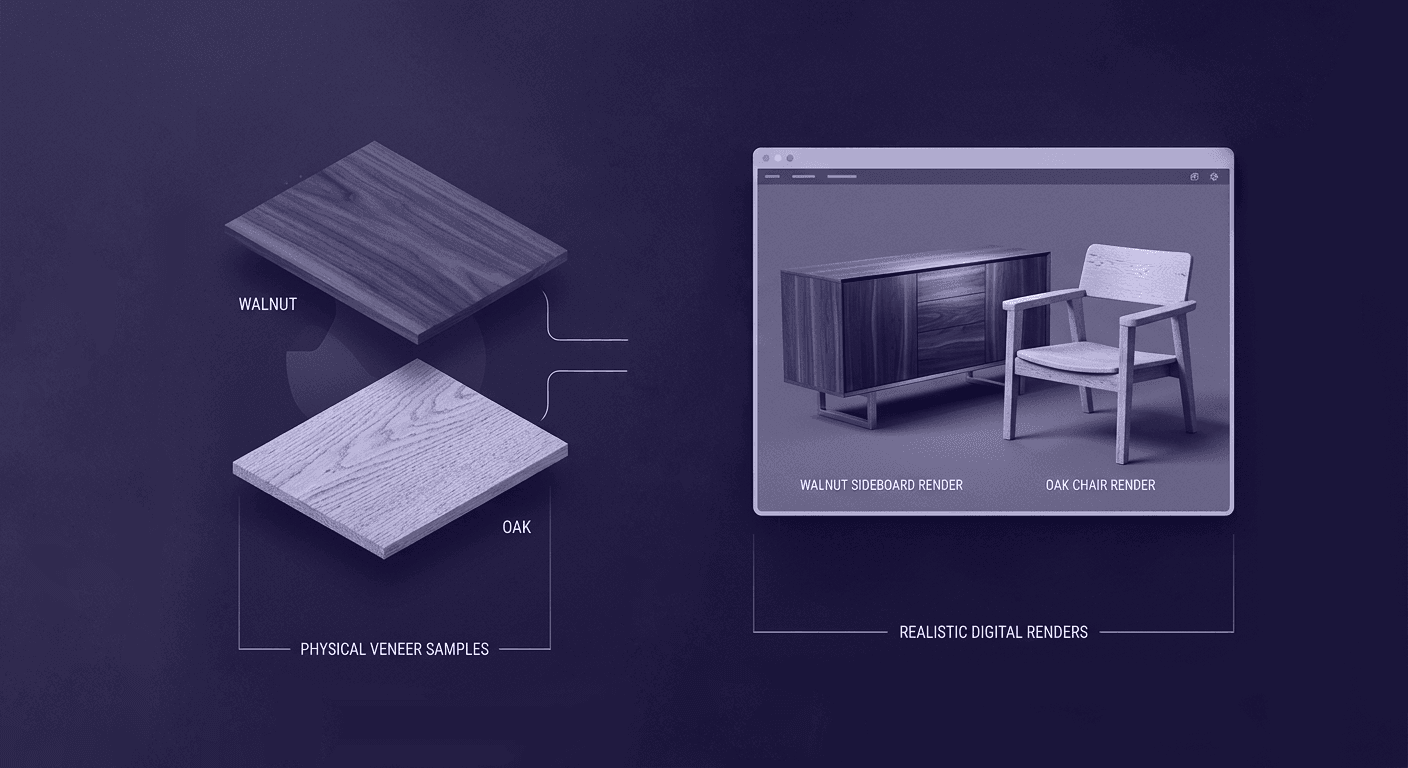
Unpacking walnut and oak: Why detail matters in design
Beyond the surface: The strategic value of veneer selection
Most designers think of veneer selection as a simple aesthetic choice. Pick a color, a grain, and move on. They’re right, but only on the surface. The real magic, the kind that elevates a good design to an iconic one, lives in the details. When we talk about walnut and oak veneer textures, we’re not just talking about light versus dark wood. We’re discussing two distinct design languages.
Here’s what we’ve found: generic veneer advice is a trap. It lumps all species into broad categories, ignoring the nuances that define a product’s character. Choosing walnut isn’t just about its rich, dark tones; it’s about communicating luxury, modernity, and warmth. Opting for oak isn’t just a traditional move; it’s a decision to use texture, resilience, and visual weight to tell a story. Species-specific knowledge turns a material choice into a strategic design tool, allowing you to control everything from perceived value to tactile experience. It’s the difference between a product that looks good and one that feels right.
The quest for perfection: What designers look for in wood veneer
As an industrial designer, you’re constantly juggling three critical elements: aesthetics, durability, and sustainability. You need a material that not only looks stunning but can also withstand daily use and align with modern environmental standards. This is where a deep understanding of wood veneer becomes your superpower.
But there’s another layer to this: visualization. Your workflow doesn’t end at material selection; it extends into CAD and rendering. How a veneer catches the light in a KeyShot render or communicates texture in a 3D model directly impacts client presentations and final approvals. The goal is photorealism, and you can’t achieve it with a generic “wood” texture. You need to know how the open pores of Red Oak will diffuse light versus the tight, smooth grain of walnut. This level of detail ensures your digital prototypes are true to your vision, streamlining the feedback loop and getting you from concept to production faster.
Walnut veneer: The essence of modern luxury
The signature look: Walnut veneer characteristics and aesthetics
Walnut doesn’t just look expensive; it feels intentional. Its color palette is its most defining feature, ranging from a deep, chocolatey brown to lighter, pale browns, often with subtle undertones of purple or grey. It’s this richness that gives it an immediate sense of sophistication.
But the color is only half the story. The grain patterns are where walnut truly shines. You’ll find everything from perfectly straight grains, ideal for clean, minimalist designs, to gentle waves and complex burls or cathedrals. This variation makes walnut incredibly versatile. A straight-grain walnut can feel architectural and controlled, while a figured walnut can serve as the centerpiece of a design, adding organic movement and visual interest. Its relatively smooth, fine-pored texture gives it a sleekness that few other woods can match, making it a go-to for products that need to communicate quiet confidence and premium quality.
Crafting with walnut: Durability, finishing, and common applications
Walnut is a durable hardwood, but it’s softer than oak. On the Janka hardness scale, it sits firmly in the middle, making it resilient enough for most furniture and interior applications but more susceptible to dents and scratches from heavy impact. This isn’t a flaw; it’s a characteristic to design for. Use it for surfaces that invite touch but aren’t subject to constant abuse.
When it comes to finishing, the best approach is one that enhances its natural beauty. You don’t need to hide the walnut under heavy stains. A simple, clear coat, whether it’s a matte lacquer or a satin polyurethane, protects the wood while letting the depth of the grain shine through. Oil finishes are also fantastic, as they penetrate the wood and give it a rich, warm glow that feels incredibly natural. The reason this works is that walnut’s beauty is inherent; your job is to preserve it, not alter it.
So, where does walnut excel? Think high-end. It’s a favorite for:
- Luxury furniture: Credenzas, executive desks, and statement chairs.
- Automotive interiors: Dashboards and trim in premium vehicles where sophistication is key.
- Contemporary spaces: Architectural paneling, high-end cabinetry, and audio equipment where the material itself is part of the product’s appeal.
Oak veneer: Versatility meets enduring character
The classic appeal: Oak veneer properties and grain patterns
If walnut is modern luxury, oak is timeless character. It’s the workhorse of the wood world, but that doesn’t make it boring. Its strength lies in its versatility and its unmistakable texture. Oak’s color is typically lighter, ranging from the pale tans of White Oak to the golden-reddish browns of Red Oak.
The most defining feature of oak is its prominent grain. Unlike walnut’s finer texture, oak has large, open pores that give it a distinctively tactile and visually textured surface. This grain can be manipulated based on how the veneer is cut:
- Plain-sawn (or flat-sawn): Creates the classic cathedral pattern, giving it a rustic, traditional feel.
- Quarter-sawn: Produces a straight, linear grain pattern with dramatic ray flecks, ribbons of texture that shimmer in the light. This cut feels more architectural and refined.
- Rift-sawn: Offers the straightest grain with minimal flecking, perfect for modern designs that require consistency and clean lines.
This variety in grain and cut makes oak a chameleon, capable of fitting into everything from a farmhouse kitchen to a sleek, Scandinavian-inspired office.
Designing with oak: Robustness, finishing, and project suitability
When it comes to durability, oak is a beast. It’s significantly harder than walnut, making it exceptionally resistant to scratches, dents, and daily wear and tear. This robustness makes it an incredibly practical choice for high-traffic areas and surfaces that need to perform under pressure.
Oak’s open grain structure also makes it incredibly receptive to finishes and stains. While a clear coat can look fantastic, especially on White Oak, staining is where it truly shows its versatility. The pores absorb stain readily, allowing you to push its color in any direction, from a deep ebony to a light, weathered grey. Liming or "cerused" finishes, which involve filling the pores with a light-colored wax or paste, are also incredibly popular, creating a stunning two-tone effect that highlights the grain’s texture.
Oak is the perfect material for projects that demand both beauty and brawn:
- Kitchen cabinetry: Its durability makes it the undisputed champion for cabinets that need to withstand years of use.
- Traditional and rustic furniture: Think sturdy dining tables, flooring, and bookcases.
- Architectural elements: Wall paneling, doors, and trim where a sense of permanence and strength is desired.
Walnut vs. Oak veneer: A head-to-head design showdown
What is the difference between walnut and oak veneer textures?
So, let’s put them side-by-side. The most immediate difference is visual and tactile. Run your hand across a sheet of walnut veneer, and it feels smooth, dense, and closed. Light tends to glide over its surface, creating a subtle, satin sheen. Its grain is typically finer and more understated, creating a feeling of seamless elegance.
Now, do the same with oak. You’ll immediately feel the texture of its open pores. It has a more tangible, organic surface. Light doesn’t just reflect off oak; it gets caught in the grain, creating visual depth and highlighting its texture. Quarter-sawn White Oak’s medullary rays can create an almost holographic effect, while plain-sawn Red Oak’s bold cathedrals give it a powerful, graphic quality. In short, walnut is about smooth sophistication; oak is about pronounced character.
Is walnut veneer more durable than oak?
This is a common question, and the answer is a straightforward no. On a technical level, oak is harder and denser than walnut, making it more resistant to scratches and impacts. For a kitchen countertop, a floor, or a family dining table, oak is the more durable, practical choice. It’s built to handle the chaos of daily life.
However, durability isn’t just about hardness. It’s about matching the material to the application. Walnut’s durability is more than sufficient for an executive desk, a media console, or a bedroom headboard. The risk of heavy impact in those scenarios is low, and its aesthetic value often outweighs the need for extreme hardness. The key isn’t to ask which is more durable, but which is the right level of durability for your specific project.
Aesthetic and functional crossroads: Choosing your species
Your choice between walnut and oak veneer textures is a decision about design intent. You’re not just choosing a look; you’re choosing a feeling. Wood texture aesthetics are a powerful tool for shaping user perception.
- Choose walnut when: Your design goal is modern elegance, sophistication, or warmth. Use it when the product needs to feel premium, sleek, and refined. It’s perfect for creating a focal point without overwhelming a space.
- Choose oak when: You need versatility, texture, and a sense of permanence. Use it for projects that require a connection to tradition, nature, or rustic charm. Or, use rift-sawn White Oak for a clean, Scandinavian aesthetic that feels both modern and organic.
Balancing visual impact with functional requirements is the core of an industrial designer’s job. The walnut vs. oak decision is a perfect microcosm of that challenge.
Beyond beauty: Practicalities for walnut and oak veneers
Walnut vs Oak veneer cost and aesthetics: Making smart choices
Generally, walnut veneer is more expensive than oak veneer. Its combination of rich color, desirable grain, and slower growth rate contributes to a higher market price. This positions it as a premium material, and its cost often aligns with the luxury products it’s used for.
Oak, being more abundant and faster-growing, is typically more affordable. This makes it an excellent choice for larger projects or budget-conscious designs where you still need the beauty and durability of a real hardwood. However, don’t mistake affordability for being “cheap.” High-quality, specially cut oak veneers like quarter-sawn or rift-sawn White Oak can command premium prices, rivaling some walnuts. The key is to align the material’s cost and perceived value with the product’s market position.
Maintaining brilliance: Care requirements for walnut and oak
Maintenance for both veneers is surprisingly similar, but there are nuances. Both should be cleaned with a soft, damp cloth, avoiding harsh chemicals or abrasive cleaners. The goal is to protect the finish, which in turn protects the wood.
- For walnut: Because it’s a bit softer, be mindful of dragging heavy or sharp objects across its surface. Using coasters and placemats is always a good practice. Its smooth surface makes it easy to dust and wipe clean.
- For oak: The open pores can trap dust and dirt more easily. Regular dusting is key, and for a deeper clean, wiping in the direction of the grain helps clear out the pores. Its hardness gives you a bit more leeway with daily wear and tear.
Ultimately, the longevity of any veneer comes down to the quality of the finish and proper care. A well-maintained veneered surface can last for decades.
The green edge: Sustainability in hardwood veneer selection
In today’s design world, sustainability isn’t optional. The good news is that wood veneer is an inherently efficient use of a natural resource. One log can produce a massive amount of veneer, far more than solid lumber. When making your hardwood veneer selection, look for suppliers who provide certification from organizations like the Forest Stewardship Council (FSC). This ensures the wood comes from responsibly managed forests.
Between the two, neither is inherently “better” from a sustainability standpoint, provided they are sourced responsibly. Oak is often more locally available in North America and Europe, which can reduce its transportation footprint. However, the most sustainable choice is always the one that is sourced ethically, manufactured efficiently, and used in a product designed to last a lifetime.
Your next design move: Strategic selection of walnut and oak veneer
How to choose between walnut and oak veneer for projects
Feeling ready to make a call? Here’s a simple decision framework to guide you.
- Define your aesthetic intent: What story are you telling? Modern and luxurious? Go with walnut. Timeless, textured, or rustic? Oak is your answer.
- Assess the functional demands: Is it a high-traffic, high-impact surface? Oak’s durability gives it the edge. Is it a decorative or low-impact piece? Walnut’s elegance is a perfect fit.
- Consider your budget: For premium, statement pieces, walnut’s cost is justified. For larger applications or projects where cost-effectiveness is key, oak provides incredible value.
- Plan your finish: Do you want to celebrate the wood’s natural color? Walnut is stunning with a clear coat. Do you need the flexibility of stains or special finishes? Oak’s porous grain is ready for anything.
Aligning these factors will lead you to the right choice every time. It’s not about which is better overall; it’s about which is perfect for the project in front of you.
The industrial designer’s edge: Mastering wood veneer species comparison
This level of detail is what separates a good designer from a great one. When you can walk into a client meeting and explain why quarter-sawn White Oak is the right choice for their minimalist office, citing its linear grain, light-reflecting properties, and durability, you build immediate trust and authority. This deep wood veneer species comparison knowledge elevates your presentations from subjective style pitches to informed, strategic recommendations.
This expertise translates directly into your rendering workflow. Instead of searching for a generic dark wood texture, you’ll be looking for a specific flat-cut walnut with a cathedral grain to ensure your render perfectly matches your manufacturing intent. This alignment between digital and physical saves time, reduces revisions, and ensures the final product is exactly what you and your client envisioned.
Redefining your workflow with confident material intelligence
Ultimately, this is about more than just wood. It’s about building a library of material intelligence that empowers your entire design process. When you understand the nuances of materials like walnut and oak, you make decisions faster. You create higher-quality, more realistic renders. You design products that are not only beautiful but also durable, sustainable, and perfectly aligned with their intended use.
You’ve got the design vision. Backing it up with deep material knowledge is the engine that will bring it to life, giving you the confidence to create better products with greater efficiency.
Beyond the grain: Your new design superpower
So, walnut or oak? At this point, you know the answer is bigger than just a spec sheet. This isn't about choosing between dark and light wood anymore. It's about choosing your story.
Think of it like this: walnut and oak are two distinct design languages. Walnut whispers elegance, modernity, and warmth. Oak speaks of timeless character, resilience, and texture. Your choice isn't just a line item in a CAD file; it's the narrative you wrap around your product.
This is the kind of material intelligence that closes the gap between your concept and the final product. The next time you’re in a design review, you won’t just be showing a wood texture. You’ll be explaining why quarter-sawn oak’s ray flecks will catch the light perfectly in a retail environment, or why walnut’s smooth, deep grain is essential to communicating a product's luxury positioning.
That’s the edge. It’s the shift from simply selecting materials to truly mastering them. You’ve got the details, now go design something that feels as good as it looks.

Max Calder
Max Calder is a creative technologist at Texturly. He specializes in material workflows, lighting, and rendering, but what drives him is enhancing creative workflows using technology. Whether he's writing about shader logic or exploring the art behind great textures, Max brings a thoughtful, hands-on perspective shaped by years in the industry. His favorite kind of learning? Collaborative, curious, and always rooted in real-world projects.
Latest Blogs

The Indie Dev Guide to CC0 PBR Textures: Stop Searching, Start Cr...
PBR textures
AI in 3D design

Mira Kapoor
Jul 10, 2026

Sourcing Free Game Textures: Navigating PBR Pipelines and Stylize...
PBR textures
Game textures
Mira Kapoor
Jul 6, 2026
Sculpting with Sunlight: The Architectural Physics of Facade Text...
Texture creation
AI in 3D design

Max Calder
Jul 1, 2026

Accelerate you workflow
with automated PBR texture generation
Enjoy creative freedom with AI powered texture creation
 Texturly
Copyright © 2026 Texturly, Asha Technology Labs Pvt. Ltd. All rights reserved