Where AI Texture Generators Are Used in Modern Design Workflows
By Max Calder | 4 March 2026 | 14 mins read
Table of contents
Table of Contents
Digital experiences today demand a high level of realism. Whether audiences are exploring virtual game worlds, watching animated films, browsing online stores, or reviewing architectural previews, surface detail plays a crucial role in how believable these environments feel. Textures give life to materials, fabric appears soft, wood shows grain, metals reflect light naturally, and stone surfaces feel tactile. Traditionally, building these textures has required significant manual effort. Artists capture reference materials, edit images, construct seamless patterns, and repeatedly refine surfaces to work under different lighting and viewing conditions. While effective, this process is slow and difficult to scale when projects require hundreds or thousands of assets.
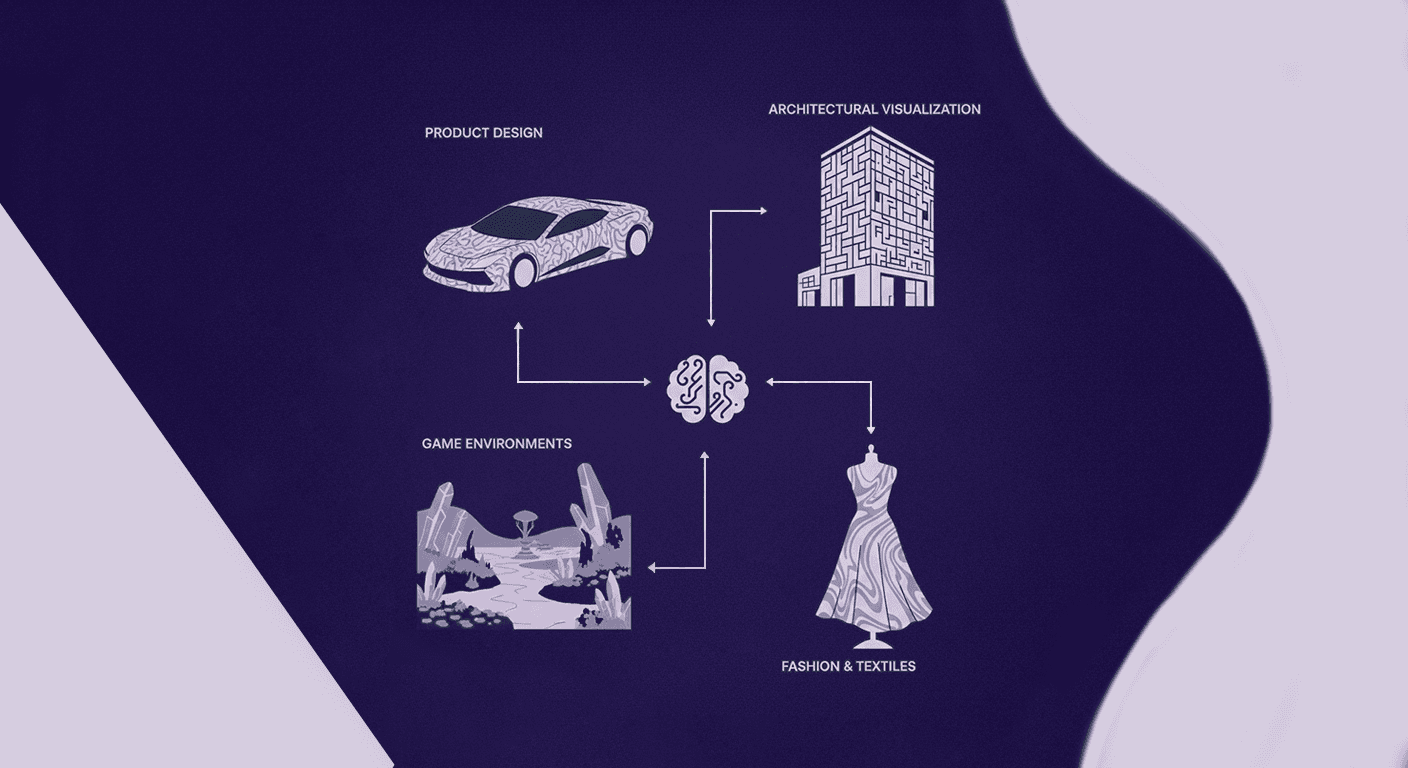
AI texture generators are changing this production model. Instead of constructing materials from scratch, designers can generate high-quality textures instantly, explore multiple variations, and refine results creatively. The focus shifts from repetitive creation to artistic decision-making.
Where AI texture generators make an impact
As production timelines tighten across industries, AI-assisted texture generation is becoming an important addition to modern design workflows. Understanding where and how these tools are used helps teams identify opportunities to work faster without sacrificing visual quality.
Improving texture creation workflows
Traditional texture production involves multiple technical steps, material sourcing, cleanup, seamless tiling, resolution optimization, and fine adjustments for realism. When teams require many variations of similar materials, such as different fabric patterns or aged surfaces, the workload increases significantly.
AI texture generators streamline this process by producing variations automatically. Designers can generate multiple options within seconds and then select or refine the most suitable results. This drastically reduces the time spent on foundational texture creation.
Another advantage is automatic seamless texture generation. Many AI tools produce tileable textures directly, removing one of the most time-consuming steps in environment creation. This allows artists to spend more time improving aesthetics rather than handling repetitive technical tasks.
Industries already benefiting
Several creative industries have already adopted AI-generated textures to speed up production. Game studios use AI tools to populate large environments with varied surfaces without overwhelming art teams. Animation and VFX production houses benefit from faster asset preparation and scene consistency. Digital artists leverage AI tools to explore new material styles and creative directions during concept stages.
Across all use cases, the main benefit remains consistent: faster production and greater creative flexibility.
Real-world applications across design industries
Game development and virtual environments
Game worlds have grown dramatically in size and complexity. Modern titles feature expansive cities, landscapes, interiors, and detailed objects that require a wide range of textures. Producing all these materials manually is expensive and time-consuming.
AI texture generators help studios build environments at scale. Terrain materials, building surfaces, and environmental variations can be generated rapidly, allowing artists to focus on refining gameplay experiences and visual storytelling.
Smaller studios and indie developers benefit especially, as AI tools allow them to achieve high-quality visuals with limited resources. This democratizes production quality and helps smaller teams compete visually with larger studios.
Animation and visual effects production
Animation and VFX workflows require material consistency across many shots and scenes. Characters, props, and environments must maintain visual accuracy under varying lighting conditions and camera angles. Creating materials manually for every asset can slow down production.
AI-generated textures help accelerate asset development by providing quick material options for background elements and environments. Artists can refine textures rather than constructing them entirely, enabling faster iteration cycles.
Virtual production environments also benefit from AI tools, as scenes often require rapid adjustments. Being able to regenerate or modify textures quickly helps teams adapt scenes without rebuilding assets from scratch.
Product visualization and virtual commerce
In product visualization, accurate material representation directly influences customer perception. Shoppers rely on visuals to evaluate fabrics, finishes, and surfaces before purchasing online. Creating numerous product material variations traditionally requires extensive manual rendering work.
AI texture generators enable scalable production of material variations, allowing brands to showcase products in multiple finishes or fabrics efficiently. This is especially useful in industries such as fashion, furniture, and consumer electronics, where customization options are common.
Virtual showrooms and digital commerce platforms can generate consistent visuals across product catalogs while maintaining production speed, helping businesses keep up with rapidly changing inventory and marketing needs.
From concept to production: Workflow advantages for teams
Faster prototyping and creative exploration
AI texture tools enable rapid experimentation early in the creative process. Designers can test multiple material directions instantly, allowing teams to compare options without committing significant time to manual production.
For example, teams can evaluate different surface wear levels, color variations, or material finishes quickly, helping stakeholders make visual decisions earlier in the project lifecycle. Faster prototyping reduces late-stage revisions and supports smoother production timelines.
This flexibility encourages creative exploration because teams are no longer constrained by production time when testing new visual ideas.
Better alignment across teams
Texture and material choices often involve collaboration between design, marketing, and production teams. Misalignment can cause repeated revisions and delays.
AI-assisted workflows support shared material libraries that teams can reuse across projects. Designers, marketers, and production specialists can work with consistent visual references, ensuring outputs match across promotional visuals and final assets.
For companies producing large volumes of digital content, such as e-commerce platforms or virtual commerce services, this consistency significantly reduces bottlenecks and improves efficiency across departments.
The future of AI in material and texture design
AI texture generation continues to evolve, and future workflows are likely to integrate even more seamlessly with design tools and real-time engines. Designers may soon generate or modify textures directly within their 3D environments rather than relying on separate applications.
Real-time material adjustment is also becoming possible, enabling artists to modify surface properties instantly while viewing scenes. This capability can drastically shorten iteration cycles and improve creative decision-making.
Another likely development involves adaptive materials, textures that adjust automatically based on environmental conditions or scene requirements. Surfaces could dynamically change appearance depending on lighting or context, further enhancing realism.
Despite rapid progress, AI tools function best when paired with artistic expertise. Designers will continue to guide style, realism, and storytelling, while AI handles repetitive generation and variation tasks.
AI as a creative accelerator, not a replacement
AI texture generators are transforming how materials are created across gaming, animation, digital art, and product visualization. Processes that once demanded extensive manual work can now be completed quickly, allowing teams to dedicate more energy to creative refinement and storytelling.
The primary benefit of AI in design lies in speed and scalability. Teams can explore more visual options, produce assets faster, and meet growing production demands without sacrificing quality. Smaller studios and independent creators also gain access to production capabilities previously limited to large teams.
However, AI does not replace creative judgment. Human expertise remains essential for defining artistic direction and ensuring authenticity. The most effective workflows combine human creativity with AI-assisted efficiency.
As creative industries continue to evolve, adopting AI-powered tools will help teams deliver richer visual experiences while maintaining flexible and efficient production pipelines.

Max Calder
Max Calder is a creative technologist at Texturly. He specializes in material workflows, lighting, and rendering, but what drives him is enhancing creative workflows using technology. Whether he's writing about shader logic or exploring the art behind great textures, Max brings a thoughtful, hands-on perspective shaped by years in the industry. His favorite kind of learning? Collaborative, curious, and always rooted in real-world projects.
Latest Blogs
The Indie Dev Guide to CC0 PBR Textures: Stop Searching, Start Cr...
PBR textures
AI in 3D design

Mira Kapoor
Jul 10, 2026
Sourcing Free Game Textures: Navigating PBR Pipelines and Stylize...
PBR textures
Game textures
Mira Kapoor
Jul 6, 2026
Sculpting with Sunlight: The Architectural Physics of Facade Text...
Texture creation
AI in 3D design

Max Calder
Jul 1, 2026

Accelerate you workflow
with automated PBR texture generation
Enjoy creative freedom with AI powered texture creation
 Texturly
Copyright © 2026 Texturly, Asha Technology Labs Pvt. Ltd. All rights reserved