10 Hands-On Experiments That Build Your Signature Texture Library
By Max Calder | 9 March 2026 | 13 mins read
Table of contents
Table of Contents
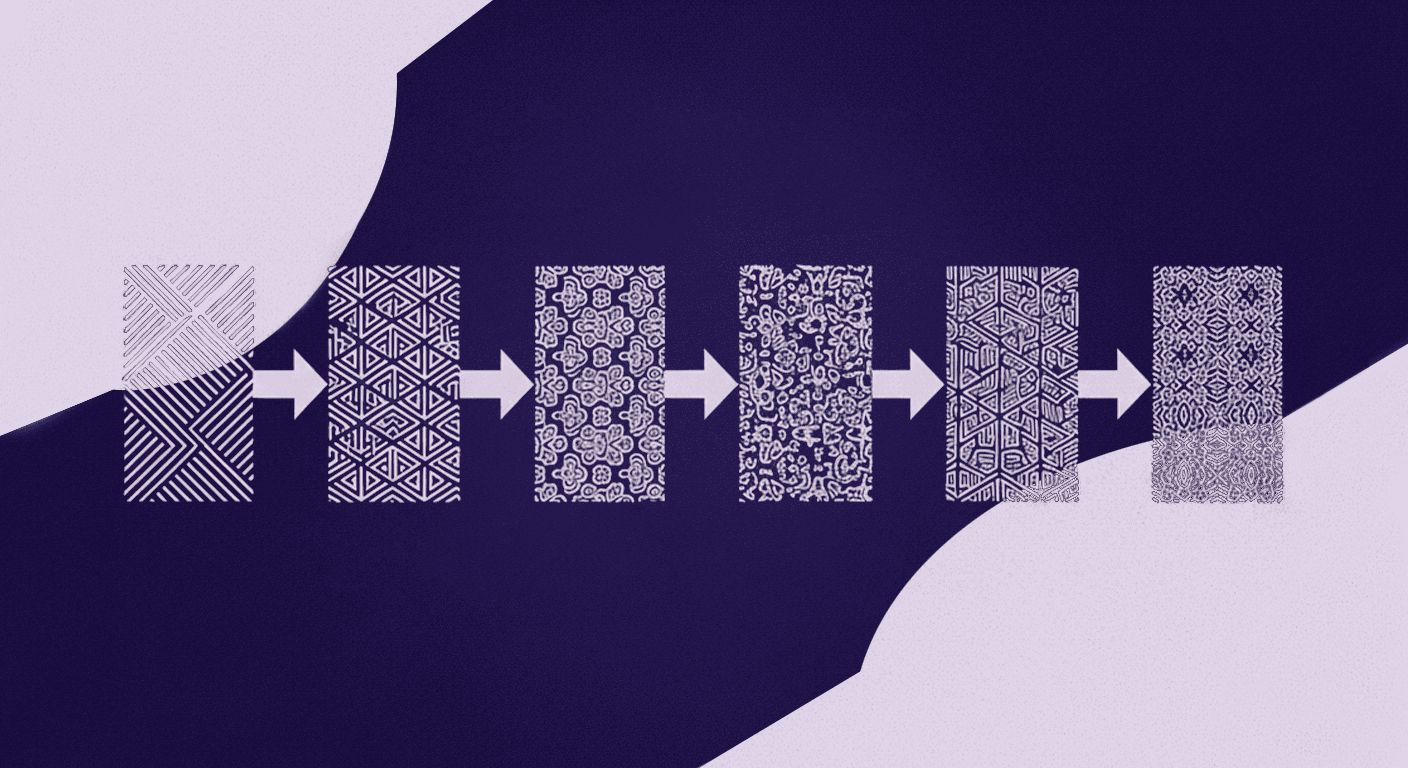
How many hours have you lost scrolling through online texture libraries, hunting for that perfect fabric? You know the feeling, you find something that’s close, but the repeat is obvious, the color is slightly off, or it just feels… generic. What if you could stop searching and start creating? This guide is about reclaiming that creative control. We're going to walk through ten hands-on, DIY experiments that will help you build a library of unique, signature textures that no one else has. This isn’t just about making pretty patterns; it's about bridging the gap between physical craft and digital design. By bringing real-world materials into your workflow, you'll infuse your 3D garments with a layer of authenticity that pre-made assets just can't match.
Why create your own textures?
Relying on pre-made assets is efficient, but it eventually puts a ceiling on your creativity. When you use the same high-street textures as everyone else, your work risks looking like an assembly-line product rather than a piece of art.
Creating your own textures isn’t just a fun side project; it’s a strategic move to reclaim creative control. Here’s what you gain when you step away from the download button and get your hands dirty:
- Develop a unique design signature: When you create your own materials, your work becomes instantly recognizable. You’re no longer just applying a texture; you’re infusing your digital garments with a piece of your own physical artistry. It’s the difference between using a stock photo and holding your own photoshoot.
- Bridge physical craft and digital design: There's a certain magic that happens when you bring a real-world object into a program like CLO3D. The imperfections, the unexpected patterns, the tangible history of a hand-dyed fabric, these elements add a layer of authenticity that’s nearly impossible to replicate with purely digital tools. You get textures that feel grounded and real.
- Gain full control over your material library: No more fighting with low-res JPEGs or textures that don’t tile properly. When you build a material from the ground up, you control the resolution, the seamlessness, and every single map. This builds a robust, high-quality library that serves you across projects in 3D, gaming, and visualization, streamlining your workflow for good.
Ready to build a library that’s 100% yours? Let’s dive into ten experiments that will get you started.
10 DIY textile texture experiments for digital designers
1. The salt & watercolor effect for organic patterns
This one feels like a science experiment from grade school, but the results are surprisingly sophisticated. Start by applying watercolor paint to a thick piece of paper or a swatch of cotton fabric. While it’s still wet, sprinkle coarse salt over the surface. Now, just let it dry.
The magic happens as the water evaporates. The salt crystals absorb the pigment, creating these incredible, branching patterns that look like frost on a window or a view of a distant nebula. Once it’s fully dry, just brush the salt off. This is an ideal technique for generating abstract, celestial-looking digital textiles that are perfect for fantasy garments or ethereal print designs.
Shibori-inspired tie-dyeing for bold graphics
Shibori is an ancient Japanese dyeing technique that involves folding, twisting, and binding fabric before dyeing it. It’s far more controlled than the chaotic tie-dye of the ‘60s. By using precise accordion folds or wrapping the fabric around a pipe, you can create stunningly geometric and high-contrast patterns.
Use this method on a simple cotton fabric with a dark dye. The resulting sharp lines and repeating shapes are perfect for modern apparel. Once you digitize the result, you can easily turn it into a seamless texture generation powerhouse for everything from bold streetwear to minimalist patterns in CLO3D.
3. Wax resist dyeing for cracked textures
Ever wanted to create a texture that looks aged, cracked, and full of history? Wax resist dyeing, also known as batik, is your answer. The process is simple: melt some wax (beeswax or paraffin works well) and either drip it, stamp it, or paint it onto your fabric. Then, submerge the fabric in dye.
The dye won’t penetrate the waxed areas. Better yet, if you gently crumple the fabric after the wax has hardened, the dye will seep into the cracks, creating a web of fine, dark lines. This DIY fabric texture creation method is perfect for generating materials that look like cracked leather, worn stone, or distressed paint.
4. Sun printing (cyanotype) with found objects
Cyanotype is a photographic printing process that produces a beautiful cyan-blue print, and you don’t need a darkroom. You just need cyanotype-sensitized fabric (or paper) and sunlight. Place found objects like leaves, flowers, lace, or even digital negatives directly onto the fabric and set it out in the sun.
After a few minutes of exposure, you rinse the fabric in water, and a striking silhouette appears where the objects blocked the light. It’s one of the best digital textile design techniques for creating delicate, one-of-a-kind patterns with subtle gradients and an ethereal quality. The results are perfect for light, airy garments or intricate print details.
5. Starch pleating for sharp, geometric folds
Sometimes texture is less about color and more about form. Starch pleating is a fantastic way to create a surface with strong, structural depth. Just soak a piece of fabric in liquid starch, fold it into a precise pattern, like an accordion or a series of triangles, and clip it together to dry.
As it dries, the starch hardens the fabric, locking the sharp folds in place. When you scan or photograph this, you capture not just the lines but the interesting shadows they cast. This is a goldmine for developing textures with strong directional flow, perfect for creating normal maps that give digital fabrics a sense of structure and weight.
6. Bubble printing with ink and soap
Here’s another playful experiment with surprisingly elegant results. Mix a bit of ink or fabric paint with soapy water in a shallow dish. Then, use a straw to blow bubbles into the mixture until they overflow onto a piece of paper or fabric placed nearby. As the bubbles pop, they leave behind a delicate, cellular pattern.
The pattern is organic, non-directional, and beautifully subtle. It’s an incredible technique for creating base textures that aren’t distracting but still have a touch of hand-made character. It’s a fast track to a unique, seamless texture generation base for anything from subtle skin-like surfaces to abstract backgrounds.
7. Rust dyeing for industrial, weathered surfaces
Need something with a bit more grit? Rust dyeing delivers an industrial, weathered aesthetic that’s hard to fake. The process is beautifully simple: find some rusty metal objects (old nails, steel wool, discarded chains), wrap them tightly in a damp piece of fabric, and leave it in a plastic bag for a few days.
The rust will transfer directly onto the material, creating rich, unpredictable patterns of orange, brown, and yellow. This is a core technique for any 3D texture workflow that requires grunge, decay, or industrial realism. Think post-apocalyptic costumes, weathered canvases, or aged metal accents.
8. Coffee & tea staining for an aged parchment look
This is one of the most accessible textile texture experiments you can try, and the results are always useful. Brew some extra-strong coffee or black tea and use it to intentionally stain a piece of fabric or heavy paper. You can soak the whole thing, drip it on, or even use the wet tea bags as stamps.
For the most authentic look, let it dry unevenly. Blot some areas and let others pool. The result is a beautifully aged, parchment-like texture that feels warm and historic. It’s a go-to method for creating vintage textiles, old paper props, or adding a subtle layer of grime to any digital material.
9. Aluminum foil imprinting for metallic creases
Need a crinkled, metallic texture in a hurry? Grab some aluminum foil. Crumple it into a tight ball, then carefully flatten it back out, but not completely. You want to preserve all those tiny creases and facets. You now have two options: use it as a stamp by applying paint to its surface and pressing it onto fabric, or simply scan the foil itself.
A direct scan captures the metallic sheen and the complex network of highlights and shadows. This is a fantastic shortcut for generating abstract, reflective surfaces or creating intricate wrinkle maps for other materials. It’s a fast, effective way to add complexity to your digital material creation process.
10. The glycerin wrinkle method for faux leather
Creating a convincing leather texture can be tough, but this trick gets you surprisingly close. In a spray bottle, mix a solution of about one part glycerin to three parts water. Lightly spray it onto a piece of fabric (a darker cotton works well), and then scrunch it up tightly. Secure it with rubber bands and let it dry completely.
When you undo it, the fabric will hold deep, permanent wrinkles that mimic the look of aged leather or skin. The glycerin keeps the fibers flexible enough to hold their shape. This is an incredible technique for generating realistic material maps, especially normal and roughness maps, for your 3D texture workflows.
The digital workflow: From physical to seamless digital material
Okay, so you've made a beautiful mess and have a stack of amazing physical textures. Now what? A great physical texture is only half the battle. The real power comes from bringing it into your digital environment correctly. Here’s the workflow to turn your DIY experiments into professional-grade digital assets.
Capturing your texture: Scanning vs. Photographing
You have two main options here: a flatbed scanner or a camera. For creating tileable textures, a scanner is almost always the better choice. Here’s why:
- Even lighting: A scanner provides perfectly flat, diffuse light across the entire surface. This is critical for capturing the pure color information (the albedo map) without any pesky shadows or highlights you’ll have to edit out later.
- Perfectly flat: It eliminates perspective distortion. Your texture is captured straight-on, making it much easier to tile.
Photographing your texture is possible, but it’s trickier. You need a controlled lighting setup (like two softboxes at 45-degree angles) to eliminate shadows and a tripod to ensure your camera is perfectly parallel to the surface. For speed and consistency, stick with a scanner.
Creating seamless textures instantly with Texturly
Once you’ve captured your texture, the next step is preparing it for real production use. Traditionally, this meant spending time in editing software, cleaning imperfections, adjusting contrast, and manually fixing edges so the texture could repeat seamlessly. While effective, that workflow can be slow and technical, especially when you’re processing multiple textures.
With Texturly, this entire cleanup and tiling process becomes dramatically simpler.
Instead of manually repairing seams, you can upload your scanned or photographed texture directly into Texturly, which automatically converts the image into a seamless, tileable texture. The system analyzes edges, blends transitions, and removes visible repetition so the material can repeat infinitely without obvious borders.
This means your hand-dyed fabrics, stained papers, folded materials, or experimental surfaces can move from raw capture to production-ready textures in seconds, without requiring manual seam correction.
Before exporting, you can also fine-tune the result inside Texturly by adjusting brightness, contrast, saturation, and sharpness. This helps correct minor scan inconsistencies or enhance surface detail without switching tools.
The result is a clean, seamless texture ready to be used across garments, environments, and digital surfaces, allowing you to focus more on creating textures and less on fixing them.
Creating material maps for 3D workflows
Your seamless color texture (the Albedo map) is great, but for true realism in a 3D texture workflow, you need more information. You need to tell the 3D software how the surface interacts with light. That’s where material maps come in.
- Normal map (bumps & dents): This map fakes surface detail without adding more polygons. You can generate one from your color map in Photoshop (Filter > 3D > Generate Normal Map) or by using dedicated software like Materialize or Substance Sampler for more control.
- Roughness map (shininess): This is a grayscale map that dictates how shiny or matte a surface is. Pure black is perfectly smooth (like a mirror), while pure white is completely rough (like chalk). You can create this by desaturating your color map and using Levels to adjust the contrast. Darker areas of your texture should generally be smoother.
- Ambient occlusion (AO) map (contact shadows): This map adds soft, fake shadows into the crevices of your texture, which adds a ton of depth and realism. This is also easily generated from your color or normal map using most material creation software.
Generating PBR maps instantly with Texturly
While material maps can be created manually using editing and material tools, this process often becomes time-consuming when working with multiple textures or large asset libraries. Each map needs adjustments, testing, and iteration to look correct under lighting, which can slow down production workflows.
Texturly simplifies this stage by automatically generating PBR maps directly from your base texture. After uploading your seamless material, the platform analyzes surface detail and produces production-ready maps within seconds. Instead of manually converting images or tweaking grayscale values, you receive ready-to-use outputs for modern 3D pipelines.
Plugging these maps into software like CLO3D, Blender, or Unreal Engine is what truly brings your physical experiment to life. You’ve officially gone from a piece of stained fabric to a fully functional, professional digital material. No more searching, just creating.
Your texture library starts now
Let’s go back to that endless scroll for the perfect texture. The difference is, now you know the secret: the best textures aren’t found, they’re made.
You’ve just walked through ten ways to step out of the asset store and into the studio. This isn’t just about making a few cool patterns; it’s a fundamental shift in your workflow. You’re moving from being a consumer of textures to the creator of your own digital materials.
Think about it. That glycerin-wrinkled fabric isn’t just an experiment; it’s the beginning of a custom leather jacket in CLO3D. That salt-and-watercolor pattern? It could become your next signature print. Each successful (or even failed) experiment builds a library that is 100% yours. No more compromising. No more “close enough.”
So, what’s next? Pick one. Just one. Grab some tea bags, find some rusty nails, or crumple up a piece of foil. Get your hands a little dirty. Because the most unique asset in your library will always be your own point of view, and now you know exactly how to plug it directly into your designs.

Max Calder
Max Calder is a creative technologist at Texturly. He specializes in material workflows, lighting, and rendering, but what drives him is enhancing creative workflows using technology. Whether he's writing about shader logic or exploring the art behind great textures, Max brings a thoughtful, hands-on perspective shaped by years in the industry. His favorite kind of learning? Collaborative, curious, and always rooted in real-world projects.
Latest Blogs
The Indie Dev Guide to CC0 PBR Textures: Stop Searching, Start Cr...
PBR textures
AI in 3D design

Mira Kapoor
Jul 10, 2026
Sourcing Free Game Textures: Navigating PBR Pipelines and Stylize...
PBR textures
Game textures
Mira Kapoor
Jul 6, 2026
Sculpting with Sunlight: The Architectural Physics of Facade Text...
Texture creation
AI in 3D design

Max Calder
Jul 1, 2026

Accelerate you workflow
with automated PBR texture generation
Enjoy creative freedom with AI powered texture creation
 Texturly
Copyright © 2026 Texturly, Asha Technology Labs Pvt. Ltd. All rights reserved